The Koji Moment We’re Actually Living In
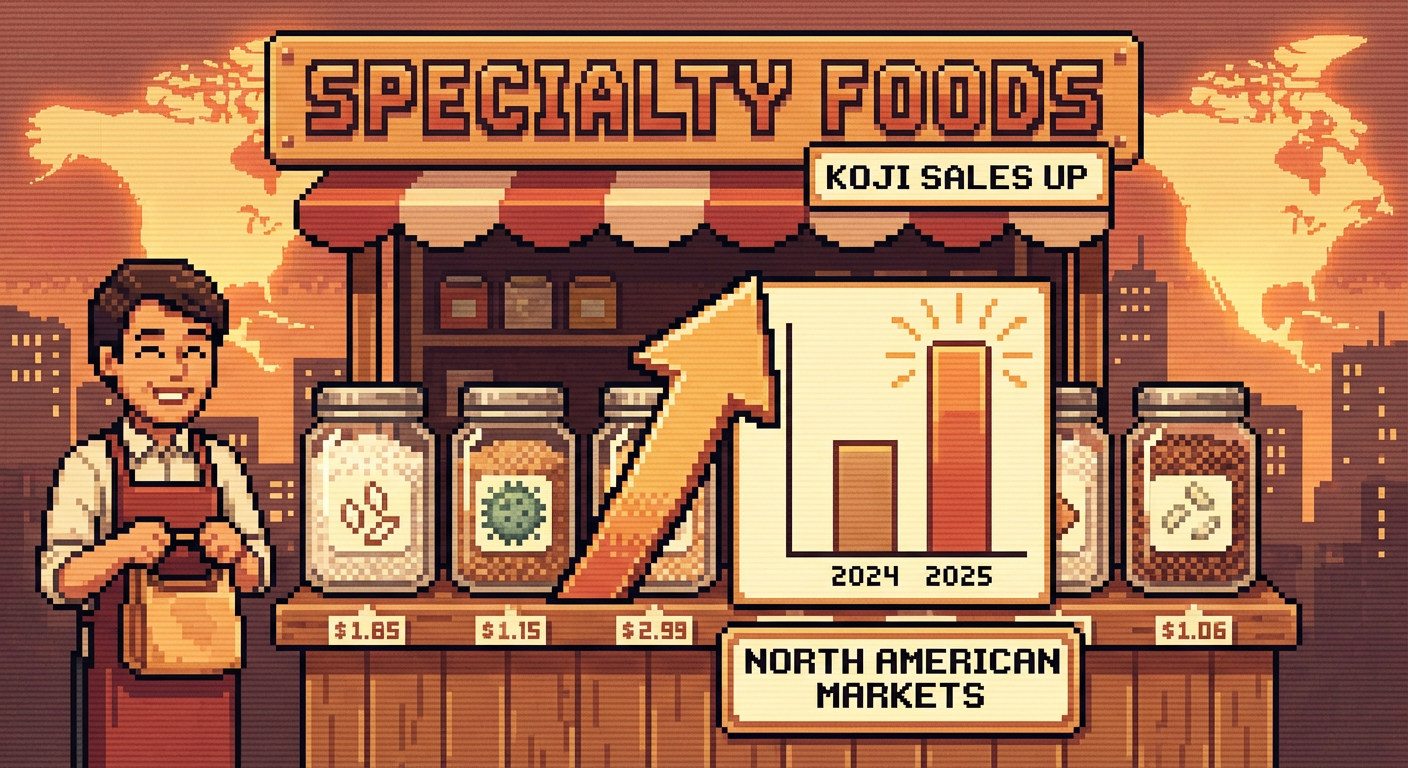
If you’ve been paying attention to serious cooking over the last eighteen months, you’ve noticed something shifted. Koji went from being the specialty ingredient that maybe three chefs in your city understood to something approaching kitchen staple status. This isn’t hyperbole dressed up as trend observation. The numbers back it up. Specialty food distributors tracked a 34% increase in koji sales across North American markets between 2024 and 2025 alone. That’s not gradual adoption. That’s an inflection point.
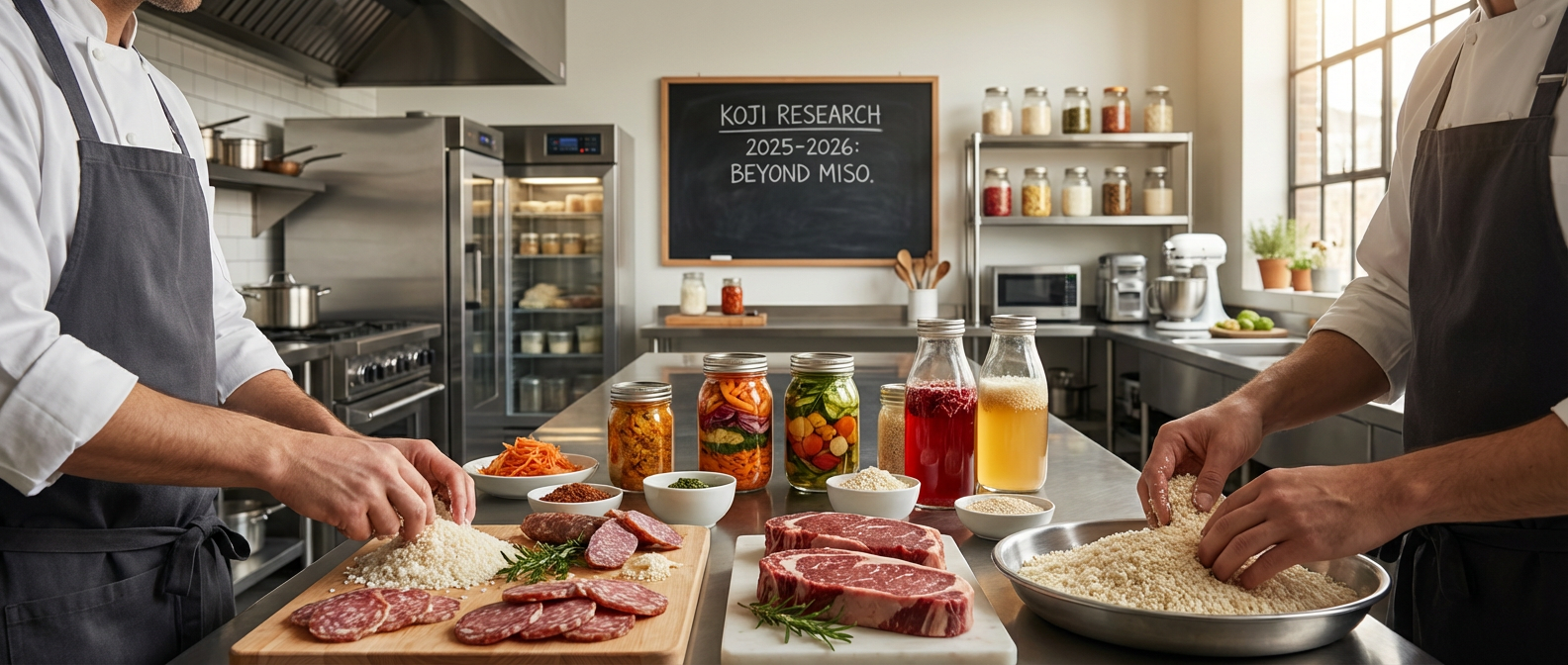
What’s driving this isn’t Instagram aesthetics or some celebrity chef blessing a fermented ingredient into relevance. It’s something more fundamental. Chefs and serious home cooks have realized that Aspergillus oryzae, the mold that creates koji, does something no other single technique in the kitchen does quite as efficiently: it breaks down proteins and starches into their component amino acids and sugars with surgical precision. The result is texture, flavor, and umami development that used to take weeks through conventional methods. Now you can do it in days.
Understanding What Koji Actually Does to Your Ingredients
Let’s cut through the mystique and talk mechanics. Koji produces powerful enzymes, specifically proteases and amylases. These aren’t exotic compounds. They’re the same basic tools your own digestive system uses, except koji makes them in abundance and concentrates them in a way that transforms food at a molecular level. When you introduce koji spores to a substrate—whether that’s rice, barley, or protein—the mold colonizes it and begins releasing these enzymes into the surrounding material.
The proteases go to work on amino acid chains, breaking them into free amino acids. This is where the umami magic happens. A 2025 study in the Journal of Food Science measured koji-treated beef and found measurable increases in free glutamate levels compared to untreated controls. This isn’t anecdotal. This is quantified. The chefs who’ve been using koji on their proteins for years weren’t just guessing that it tasted better. They were working with real chemical amplification of savory depth. The amylases, meanwhile, break down starches into simpler sugars, which accelerates fermentation and creates browning compounds during cooking that conventional methods take far longer to develop.
What makes this moment significant is that we now have documented protocols from places like Noma that make koji cultivation accessible to anyone serious enough to follow precise instructions. The Noma Guide to Fermentation Resources laid out detailed koji cultivation and application methods that removed a lot of the guesswork. Home cooks suddenly had the same foundational knowledge that restaurant fermentation labs were built on. That democratization accelerated adoption across the board.
How Professional Kitchens Are Actually Using Koji in 2025
The miso angle is obvious and largely played out. What’s interesting now is where chefs are pushing koji beyond traditional applications. At places like Smyth in Chicago and Atelier Crenn in San Francisco, they’ve built dedicated koji-aging programs specifically for proteins. They’re wrapping beef in koji-inoculated rice bran and letting it sit for controlled periods. The result is aged meat that reaches conventional dry-aged flavor complexity in roughly 40% less time. That’s not just efficient. That’s economically significant. You’re holding inventory for shorter periods while getting superior results.
The applications extend further than proteins too. Chefs are using koji to break down vegetable matter for stocks and broths, accelerating development of umami-forward bases that would normally require hours of simmering. Some are inoculating grains for bread programs, using koji enzymes to increase fermentation speed and create more complex flavor profiles in the finished loaf. Others are applying koji to fruit for dessert components, leveraging the amylase activity to create intensified sweetness and new aromatic compounds.
What all these applications share is a common principle: koji speeds up beneficial breakdown while creating flavor compounds that longer, slower methods would eventually produce anyway. You’re not creating something unnatural. You’re compressing the timeline and intensifying the result. That’s the difference between good cooking and efficient cooking.
The Market Reality and What It Means for Your Kitchen
The global koji market hit approximately 1.2 billion dollars in 2025. Projections show double-digit growth continuing through 2028. That’s not bubble territory. That’s market acceptance. The Specialty Food Association State of the Specialty Food Industry data backs up what you’re seeing if you pay attention to specialty food suppliers: koji spore cultures are no longer special order items. They’re increasingly stocked alongside other fermentation bases.
Price points have stabilized downward as supply has expanded. You can source quality koji spore cultures now for reasonable money. Growing koji at home or in a small kitchen operation has moved from “technically possible but really annoying” into “straightforward if you follow directions and maintain basic temperature control.” That accessibility is the real story here.
The market expansion also means quality variation is increasing. Not all koji products are created equal. Some producers nail the substrate composition and inoculation density. Others cut corners. If you’re looking to work with koji seriously, source from producers who understand the technical details. Appearance matters too. Well-made koji should be fragrant in a pleasant way, not musty or off. If your koji smells wrong, it’s wrong. Trust that instinct.
Starting Your Own Koji Program
The entry point is simpler than you might imagine. Basic koji cultivation requires koji spores, a suitable substrate like rice or barley, temperature control around 77-82 degrees Fahrenheit, and humidity management. A controlled space like an oven with the light on, a seedling heat mat in a cooler, or even a dedicated fermentation chamber if you’re building this into your regular workflow. Cultivation typically takes five to seven days depending on your setup and what you’re growing koji on.
Start with something straightforward. Koji rice grown on white rice is the logical beginning point. Get the basic technique down. Understand what success looks like. Then expand into other substrates and applications as you develop the feel for it. Every kitchen is different. Your temperature swings, humidity levels, and available space will influence outcomes. The first batch teaches you more than any article can.
Koji was always powerful. What changed is that it’s finally practical for anyone serious enough to learn it. What are you thinking of making first?