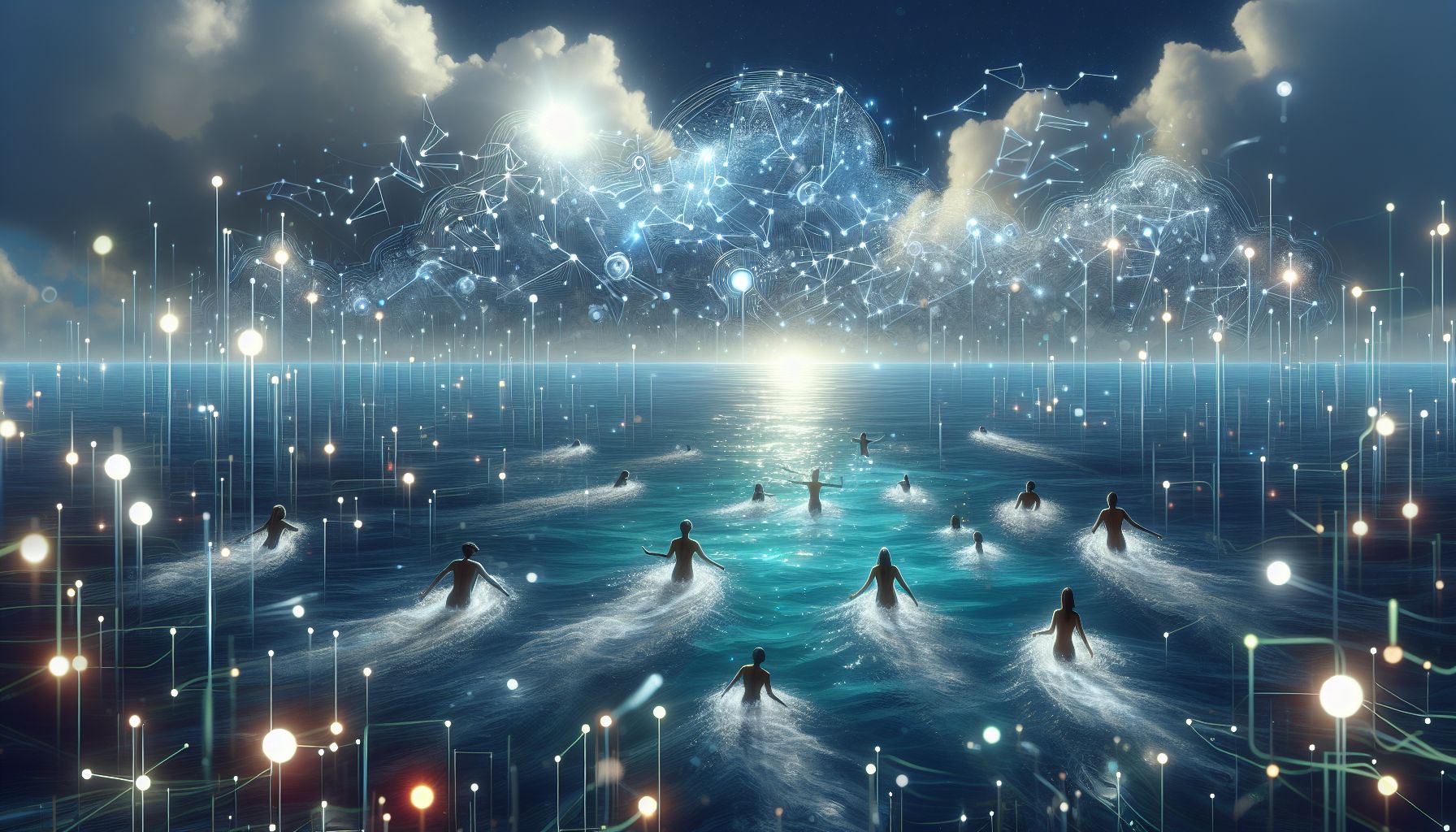
Hey there, fellow tech aficionados! Today, I’ve got something insanely cool to share with you that’s been buzzing in my mind for a while now. It’s all about how Artificial Intelligence—yup, our silicon-based friend—is redefining the boundaries of creative expression. We’re diving deep into AI in the arts today, and trust me, you won’t want to miss this ride.
The Digital Picasso: When Machines Learn to Paint
We’re living in a wild time where art and technology seem to have hopped on the same wild roller coaster. Maybe you’ve already seen some of those AI-generated images that have taken the internet by storm—like realistic yet mind-bending portraits or abstract landscapes that rival any contemporary human artist. Companies like OpenAI, with their DALL-E 2, and DeepArt are leading this tech revolution, and it’s pretty much like giving a paintbrush to a computer and saying, “Go make me something fabulous!” And believe it, they’re pulling it off.
What gets me excited isn’t just that these AI tools can create pieces that look good. It’s that they’re pushing us to ask fundamental questions about what art is. As an art lover myself, I’ve always appreciated the deeply human connection behind each brushstroke. But these generative art AIs are forcing me to rethink that definition. I mean, if a machine can evoke the same emotions through its creations, do we redefine what we consider an artist? Or do we expand our understanding of creativity altogether?
Artists of the Future: Humans or Machines?
Here’s where things get juicy. As a species, I think we’ve always been a little scared that machines might take over our jobs. (Okay, maybe more than a little). But the creative field? That always felt kind of sacred, a last frontier that only human emotion and experience could conquer.
However, AI isn’t just painting landscapes at this point. It’s writing novels and even making music that slaps. There are fantastic collaborations out there where human artists feed AI systems with their ideas, letting the machine come up with designs they might not have envisioned on their own. It’s like having an extraterrestrial artist apprentice that takes your innovation to the next level. Pretty sweet, right?
The wild advantage here is the pace at which AI evolves. Unlike us fleshy humans, who still joke about machines never getting tired of 9 to 5s, AI can churn out content non-stop. It can shift styles, experiment endlessly, and practically live in its own R&D lab of creativity.
Challenges and Concerns: Of Pixels and Ethics
But, of course, it’s not all sunshine and virtual rainbows. As we plunge into this brave new world, we’re hitting some substantial ethical roadblocks, too. How do we credit the creators—both human and machine—without stepping on IP toes? Who owns the rights to something concocted in the mind of an AI? There’s a legal gray area there that’s about as murky as a mug of gas station coffee.
And let’s not forget the nature of the inputs feeding these AI systems. Bias in AI has been a hot topic for a while now, and the arts are no exception. The datasets and algorithms shaping these AIs often reflect their programmers’ ideas—and biases. As a result, if we’re not careful, we risk losing diversity in artistry, creating echo chambers of creativity rather than rich, multicultural collaborations.
Looking Ahead: An Artistic Utopia?
Imagine a future where every person has an AI muse by their side. You could whisper your wildest visions and watch them transform into a masterstroke with the click of a button. This would democratize creativity, providing access to those who’d never dare to pick up a paintbrush themselves—artists, dreamers, and the creatively curious.
The prospect is tantalizing but requires caution. One challenge is making sure these tools are accessible and not just another playground for the well-funded tech giants. That’s a key conversation we need to have to build a fair space that lifts all creative boats.
Conclusion: The Art of Possibility
There you have it, friends: a whirlwind tour through a world where AI and art hold hands and leap into a realm beyond our traditional canvas. It’s thrilling, daunting, and inspiring all at once. Plus, it creates room for all kinds of creative souls—whether one’s alliance leans human, artificial, or somewhere beautifully in-between.
In the spirit of artistic innovation, I’ll leave you with a question: If an AI could create anything you imagined, what would you ask it to make first?
As always, stay curious, and let your imagination fly as freely as ever.
Catch you on the next wave of tech wonder!
Cheers,
[Your Name]
P.S. We’re in an age where even our robots can become artists. I’d say the future is paint-brushes-down provocatively unexpected—wouldn’t you agree?