The Truth About Restaurant Economics: Why Your Favorite Place Is Struggling and What That Means for Your Plate

The Math That Doesn’t Add Up

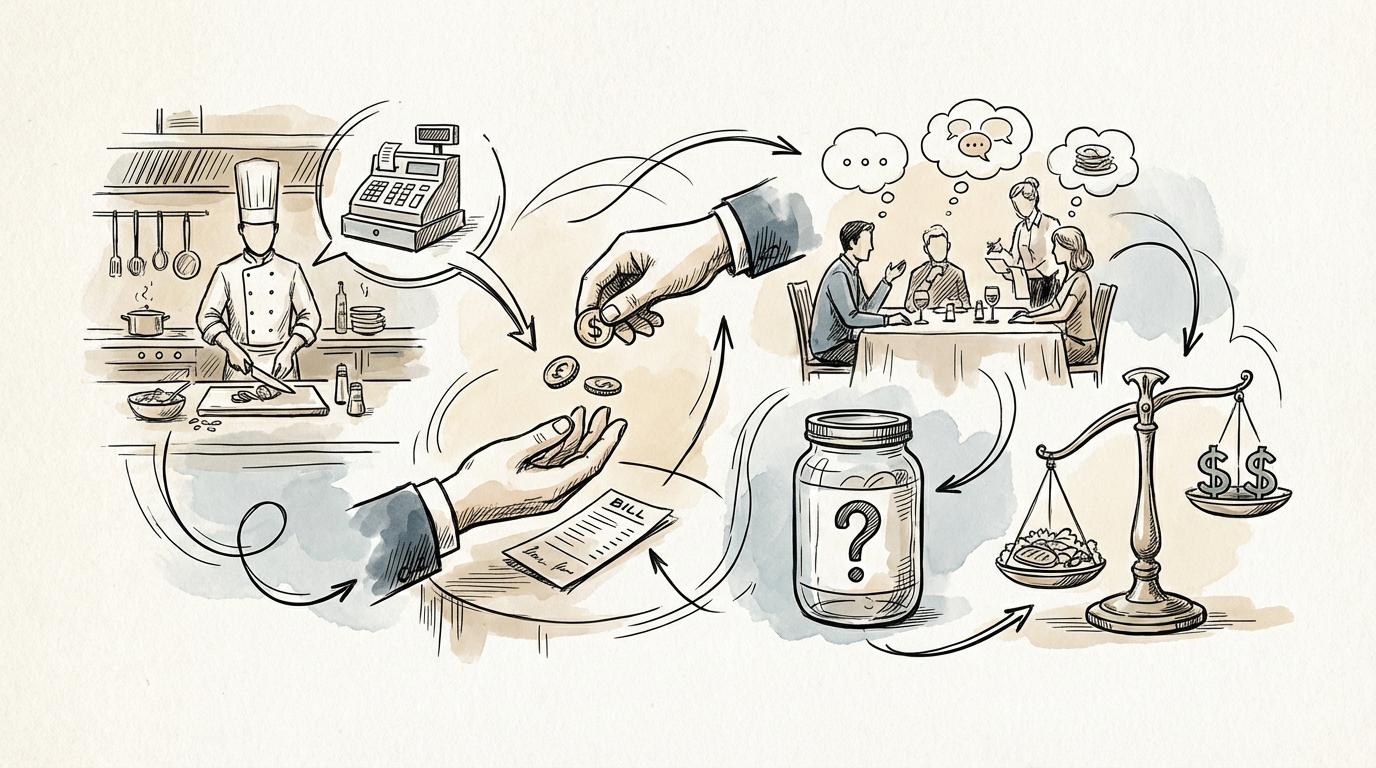
Let me be direct: the restaurant industry is broken, and it’s not broken because chefs can’t cook or servers can’t serve. It’s broken because the fundamental economics stopped making sense somewhere around 2015, and nobody’s found a sustainable fix yet. The National Restaurant Association reports that the US restaurant industry pulled in 1.1 trillion dollars in 2025, which sounds enormous until you understand what that actually translates to on the ground level. Most restaurants operate on profit margins between 3 and 9 percent. That’s not a typo. A single bad weekend, a surprise spike in food costs, or a kitchen fire can obliterate an entire year’s profit.

The Truth About Restaurant Economics: Why Your Favorite Place Is Struggling and What That Means for Your Plate

I’ve worked in enough restaurant kitchens to know exactly where money disappears. Labor costs run 28 to 35 percent of revenue for full-service restaurants. Rent for decent real estate in any major city has become absurd. A mid-level urban restaurant might pay 8 to 12 percent of gross revenue just for the space. Then add utilities, insurance, equipment maintenance, waste disposal, and the constant need to replace worn-out smallwares. By the time you’ve paid your suppliers and covered your overhead, the margin left for actual profit is paper-thin. This is why a restaurant that seems perpetually busy can still close suddenly. You’re not seeing the full picture from your table.

The Tipping Spiral Nobody Wanted

Here’s where things get uncomfortable, and I’m going to say what most restaurant industry people won’t: tipping culture in America has become a psychological burden on both sides of the equation. Seventy-five percent of customers now report feeling pressured when the card reader slides across the counter with suggested tip amounts ranging from 18 to 25 percent. That’s not gratitude anymore. That’s coercion dressed up in politeness. I’ve worked shifts where I made decent money from tips, and shifts where I made nothing. The unpredictability created stress that affected the quality of service I could deliver, because I was anxious about money instead of focused on the table.

The real problem is that restaurants have offloaded wage responsibility onto customers while simultaneously facing wage pressures that demand higher base pay. A server in New York or San Francisco needs to make enough money to afford rent in that city, but restaurants can’t sustainably raise base wages when margins sit at single digits. So the industry invented a workaround: expand tipping culture into every interaction. Baristas, bakery workers, grab-and-go counters. It’s metastasized into something that makes nobody happy. Customers feel nickeled and dimed. Workers still don’t make stable money. Owners can’t profitably raise wages. Everyone loses except the tip-shuffling algorithms.

Service-Included Pricing and the Honest Conversation

The tide is shifting in major coastal cities, and frankly, it’s about time. More restaurants are experimenting with service-included pricing models, where gratuity is built into menu prices and paid directly to staff instead of collected at checkout. This sounds simple, but it’s actually a radical restructuring of how restaurants operate. At its best, it’s honest. You see the full price. Staff gets reliable income. No psychological warfare at the payment terminal. Eater food culture has covered this shift extensively, and the data shows customers respond well when they understand the model upfront.

But here’s the catch: it requires restaurants to be transparent about their margins, and it requires consumers to accept higher menu prices. Both things create friction. Restaurants worry that sticker shock will drive customers away. Diners who’ve spent years conditioning themselves to ignore menu prices and add tip at the end suddenly see the true cost of dining out, and it’s jarring. Yet this is actually how most of the world operates outside America. You pay the price on the menu. Staff gets a living wage from the restaurant. Everyone understands the transaction. It’s not perfect, but it’s honest, and honesty is in short supply in this industry right now.

The Delivery Platform Squeeze and Ghost Kitchen Collapse

Food delivery platforms have systematically gutted restaurant economics in ways that most casual diners don’t fully appreciate. Third-party aggregators like DoorDash, Uber Eats, and Grubhub take between 25 and 35 percent commission on each order. That’s not a minor operational expense. On a typical $40 entree order, you’re losing 10 to 14 dollars before your food costs are even factored in. For thin-margin restaurants, that’s the difference between profit and loss on that transaction. Restaurants accepted these terms because they were desperate for incremental revenue during the pandemic. Now, five years later, they’re trapped. They can’t remove themselves from the platforms without losing visibility, but the commissions are unsustainable.

The ghost kitchen boom that exploded in 2020 and 2021 was supposed to solve this. Low-overhead kitchens with no front-of-house, no dining room, pure delivery focus. By 2025, most of those operations have either failed or consolidated. Why? Because the delivery economics never actually changed. You still had to pay ruinous commissions. You still had to deliver food that degraded in quality during transport. You had to compete with thousands of other ghost kitchens. The National Restaurant Association has watched this space carefully, and the data shows that the ghost kitchen concept works only for a narrow subset of high-volume, low-complexity operations. For everyone else, it was a dead end. Restaurants learned that streaming through third-party platforms doesn’t replace the real business of feeding people in your own space.

What This Means for You as a Customer

So where does this leave you when you’re deciding where to eat? Honestly, it’s complicated. Supporting restaurants matters, but not blindly. Visit places where you can see care in execution, where the owner or head chef is actually present and invested. These places are fighting the numbers every single day. They’ve chosen to stay independent when consolidation would be easier. Ask questions about service-included pricing if you see it. Understand that a restaurant charging what seems like high prices might simply be practicing honesty about their costs. Avoid the places that are just playing the efficiency game, ordering from Sysco, reheating, and praying.

Tip appropriately when you encounter actual service that’s thoughtful and skilled. Don’t tip the iPad screen at a grab-and-go counter just because a prompt appeared. Vote with your money for the business models that make sense to you. If you prefer transparency, patronize restaurants using service-included pricing. If you want the traditional tipping model, that’s fine too, but go in with eyes open about what you’re supporting. Your choices as a customer do shape where this industry goes, even when it doesn’t feel that way.

What’s your breaking point? Where do you draw the line between supporting a restaurant and accepting unsustainable customer economics? Drop your thoughts in the comments. I’m genuinely curious how diners are thinking about this moment in food culture.

Tepache Is Having Its Mainstream Moment—And the Craft Beverage Industry Is Cashing In

The Numbers Tell a Story of Explosive Growth

If you’ve been paying attention to the beverage cooler at your local Whole Foods or Target lately, you’ve probably noticed bottles of tepache sitting alongside kombucha and other fermented drinks. This isn’t accident or novelty. The numbers backing this shift are staggering. De La Calle, the Los Angeles-based brand leading the charge, reported a 210% revenue increase in 2025 and expanded into 18,000 retail locations across the country. That’s not gradual market penetration. That’s a category arriving.

The broader fermented beverage category tells an even more compelling story. Data from the latest Nielsen IQ report shows that drinks in this space—tepache, jun kombucha, water kefir, and similar products—grew 47% year-over-year to reach $890 million in U.S. retail sales by the end of 2025. That growth rate dwarfs nearly every other segment in the beverage market. Something genuinely interesting is happening here, and major players are taking notice. Constellation Brands, the corporation behind Corona and Robert Mondavi, acquired a minority stake in De La Calle in January 2026, valuing the company at approximately $85 million. That’s serious institutional capital backing a beverage that most American consumers couldn’t have identified five years ago.

Understanding What Tepache Actually Is

Before diving deeper into the business side, let’s talk about what tepache is and why it matters from a technical standpoint. Tepache is a fermented beverage with roots in pre-Hispanic Mexico. It’s made by fermenting brown sugar, corn, dried fruit, and spices with wild yeasts and bacteria. The process creates a drink that’s lightly effervescent, mildly sweet, and slightly alcoholic, typically ranging from 1 to 4% ABV depending on fermentation time and conditions. It’s neither quite beer nor quite kombucha, but occupies its own interesting middle ground.

The fermentation process is where things get scientifically compelling. Unlike kombucha, which relies on a SCOBY (symbiotic culture of bacteria and yeast) to drive fermentation, tepache traditionally uses environmental microbes and carefully selected starter cultures. The main players are Saccharomyces cerevisiae (a common brewing yeast) and various lactobacillus species that produce organic acids. These microorganisms consume the sugar over days or weeks, creating carbonation as a byproduct of their metabolic activity. The result is a beverage with natural probiotics, organic acids, and complex flavor compounds that come from the specific fruit and spice combinations used. This isn’t just fermented sugar water. It’s a living product with real nutritional complexity.

The Certification Boom and What It Means

One telling indicator of tepache’s trajectory is the surge in organic certification applications. The USDA received 38% more applications for organic certification of pineapple-based fermented beverages in fiscal year 2025 compared to the previous year. That statistic might seem niche, but it reflects something crucial: the industry is professionalizing. Brands aren’t just making tepache in small batches anymore. They’re building systems around scale, testing protocols, and compliance frameworks.

This certification push matters because it signals consumer sophistication and brand accountability. Organic certification requires rigorous documentation of ingredients, fermentation conditions, and finished product testing. When you’re seeing pineapple-based fermented beverage applications up 38% year-over-year, you’re watching small producers graduate to serious manufacturing. They’re investing in lab testing, building supply chains for certified organic inputs, and committing to transparent practices. That’s the infrastructure required to sustain growth beyond the initial enthusiasm phase.

Tepache Enters Fine Dining—A Turning Point

Here’s a moment worth pausing on. The 2025 Michelin Guide for Mexico City noted tepache on the pairing menus of at least 11 recognized restaurants. Eleven. This is tepache’s formal entry into structured fine dining beverage programs. That’s not marketing hype. That’s chefs with culinary credentials treating tepache seriously enough to pair it with multiple courses in restaurants operating at the highest level of professional execution.

I’ve spent enough time in fine dining kitchens to know that beverage inclusion at that level requires real conviction. These aren’t impulse decisions. Chefs taste tepache critically, evaluate how it performs alongside their food, and consider whether it contributes meaningfully to the dining experience. The fact that 11 Michelin-recognized establishments reached that conclusion suggests tepache has technical merit beyond novelty. The slight acidity, the mild sweetness, the subtle funk from fermentation—these elements can genuinely enhance a meal if handled correctly. It tells the broader industry that tepache deserves a seat at the sophisticated beverage table, not just the trendy snack shelf.

The Craft Beverage Industry’s Calculated Bet

What we’re watching unfold is a familiar industry pattern: a traditional product from a specific cultural region gains traction among a certain consumer segment, larger corporations recognize the growth potential, and capital flows in to scale and standardize what was previously artisanal or niche. The difference here is that tepache has several advantages that earlier food trends didn’t possess. It’s genuinely better for you than sugary sodas or high-calorie energy drinks. It contains probiotics and organic acids with documented health benefits. It tastes interesting in a way that doesn’t require an acquired palate. And it has deep cultural roots that lend authenticity and story.

De La Calle’s presence in 18,000 retail locations represents something specific: mainstream acceptance at scale. De La Calle Official Brand Story documents a brand that started with family recipes and grew into a professional operation capable of supplying major retailers. That trajectory matters because it shows that scaling doesn’t require sacrificing the technical integrity of the product. Well-made tepache produced at 10,000 units per day should taste meaningfully similar to hand-fermented batches, though the real test is whether major brands maintain that commitment as growth accelerates.

The fermented beverage category’s 47% annual growth to $890 million suggests we’re still in the early expansion phase. The question isn’t whether tepache will remain mainstream—that’s already happened. The question is whether the quality stays consistent as production scales, whether producers maintain their commitment to fermentation integrity, and whether consumers develop the palate to differentiate between well-made tepache and mediocre versions. That’s where the real story will play out. Nielsen IQ Fermented Beverage Category Report confirms the market exists. Now we’ll see who does right by it.

The Real Math Behind Your Plate: Why Restaurants Cost What They Do and What You Should Actually Pay

The $1.1 Trillion Industry That Can’t Make Money

Here’s something that keeps restaurant owners awake at night: the industry generated $1.1 trillion in revenue in 2025, yet most establishments operate on profit margins between 3 and 9 percent. To put that in perspective, if you’re running a restaurant grossing $2 million annually, you’re probably clearing somewhere between $60,000 and $180,000 before taxes. That’s not startup capital. That’s not enough to justify the 70-hour weeks most owners work. That’s survival math.

I’ve spent enough time in restaurant kitchens to understand where that money actually goes, and it’s not mysterious. Ingredient costs alone run 25 to 35 percent of revenue at most establishments. Add labor—typically the single largest expense at 25 to 35 percent—and you’ve already spent 50 to 70 percent of every dollar that comes in. Now factor in rent, utilities, insurance, equipment maintenance, licensing, and the food waste that nobody talks about because it’s too depressing. Suddenly that 6 percent margin doesn’t feel generous anymore.

The Delivery Platform Squeeze Nobody Acknowledges

If you’ve ordered food through a delivery platform recently, you’ve probably noticed prices seem inflated compared to eating in the restaurant. There’s a reason for that, and it’s not greed. Third-party delivery platforms take 25 to 35 percent commission on every order. Some charge even more. When a restaurant owner looks at that arrangement, they have to choose between absorbing those costs and destroying their margins even further, or raising menu prices so dramatically that customers feel angry about the markup.

This created genuine friction in the restaurant industry post-pandemic. Ghost kitchens—delivery-only operations with no front-of-house—became trendy as restaurants tried to optimize specifically for platform delivery. What happened? The concept largely collapsed once the initial pandemic surge faded. Those operations discovered what many of us already knew: delivering commodity food lacks the margins and customer loyalty needed to stay afloat. A cooked meal degrades significantly during delivery. Consistency suffers. Customers blame the restaurant rather than the platform. The model doesn’t work at scale without serious operational excellence.

Tipping Culture Is Broken, But Not How You Think

Three out of four customers now report feeling pressured by tipping culture, and I understand that frustration completely. What bothers me more is that this pressure exists because restaurants have outsourced wage responsibility to customers. In many states, tipped employees earn the federal minimum of $2.13 per hour before tips. That’s not a system flaw—it’s intentional policy that shifts labor costs from business owners to diners.

But here’s where the conversation gets complicated: simply increasing menu prices and eliminating tipping doesn’t automatically solve anything if those price increases don’t translate to actual wage increases for service staff. Service-included pricing models have gained traction in major coastal cities precisely because labor costs there are astronomical and tip culture became unsustainable. Some restaurants implementing this approach genuinely increased staff wages. Others just captured the extra revenue and called it overhead. You need to look at individual operations and what they’re actually doing.

The tension people feel at the register—that moment where you’re asked to add 20, 25, or 30 percent to your bill—reflects a broken system. But the answer isn’t to pretend that paying a server $35,000 annually is somehow disrespecting them less than asking customers to tip fairly. The real conversation needs to be about whether restaurants can actually afford to operate with higher built-in labor costs, or whether this entire industry needs different fundamentals.

Value Means Different Things at Different Price Points

I’ve eaten exceptional food at budget restaurants and mediocre food at expensive ones. The difference rarely comes down to ingredient cost. I’ve had outstanding fish tacos for eight dollars that required more technical skill than a forty-dollar entrée that was essentially a competent sear job. What changes with price is typically portion size, ambiance, service attentiveness, and wine program depth—not necessarily the chef’s competence.

When you’re evaluating whether a meal represents good value, look at execution first. A cheap burger done right—properly seasoned, correctly seared, with high-quality beef—is objectively better than an expensive burger that’s been overcooked and underseasoned. Can you taste that the meat is higher quality? Can you identify the technique in how it was prepared? Those questions matter more than the price tag. For deeper insights into current food industry conversations, Eater food culture and National Restaurant Association resources track both consumer trends and operational realities.

The most dangerous mistake diners make is assuming expensive automatically means well-made. It doesn’t. Expensive often means expensive rent, or expensive marketing, or expensive wasteful operations. Conversely, a twenty-dollar plate can absolutely represent extraordinary value if the kitchen has its costs controlled and its technique dialed in. Learn to recognize the difference between price and value, and you’ll eat better at every budget level.

What You Actually Owe Restaurants, and Yourself

Here’s what I believe after years of both cooking and eating in this industry: restaurants are currently structured in ways that make it nearly impossible for most operators to thrive. Those thin margins aren’t hypothetical—they’re real constraints that force difficult choices about quality, staff wages, and sustainability. When you pay for food, you’re supporting a business that likely operates on less predictable margins than most other service industries.

That doesn’t mean you should overpay for mediocre food out of sympathy. It means being realistic about value. Tip appropriately for actual service quality. Understand that menu prices reflect real costs, not arbitrary markups. Support restaurants that have their operational act together rather than those simply charging premium prices. Eat locally when possible, since delivery platform commissions eat into the economics fast. And recognize that a cheap meal isn’t actually cheap if it required the cook to work for poverty wages or the owner to cut corners on safety and sanitation.

Some operators will figure out sustainable paths forward. Others won’t. Your job as a diner is to eat intentionally—understanding what you’re actually paying for and whether that represents fair exchange for everyone involved. What changes have you noticed in how restaurants price and staff their operations where you live?

Why Every Serious Kitchen Is Now Using Koji Beyond Miso: The 2025-2026 Fermentation Revolution

The Koji Moment We’re Actually Living In

If you’ve been paying attention to serious cooking over the last eighteen months, you’ve noticed something shifted. Koji went from being the specialty ingredient that maybe three chefs in your city understood to something approaching kitchen staple status. This isn’t hyperbole dressed up as trend observation. The numbers back it up. Specialty food distributors tracked a 34% increase in koji sales across North American markets between 2024 and 2025 alone. That’s not gradual adoption. That’s an inflection point.

Why Every Serious Kitchen Is Now Using Koji Beyond Miso: The 2025-2026 Fermentation Revolution

What’s driving this isn’t Instagram aesthetics or some celebrity chef blessing a fermented ingredient into relevance. It’s something more fundamental. Chefs and serious home cooks have realized that Aspergillus oryzae, the mold that creates koji, does something no other single technique in the kitchen does quite as efficiently: it breaks down proteins and starches into their component amino acids and sugars with surgical precision. The result is texture, flavor, and umami development that used to take weeks through conventional methods. Now you can do it in days.

Illustration for Why Every Serious Kitchen Is Now Using Koji Beyond Miso: The 2025-2026 Fermentation Revolution

Understanding What Koji Actually Does to Your Ingredients

Let’s cut through the mystique and talk mechanics. Koji produces powerful enzymes, specifically proteases and amylases. These aren’t exotic compounds. They’re the same basic tools your own digestive system uses, except koji makes them in abundance and concentrates them in a way that transforms food at a molecular level. When you introduce koji spores to a substrate—whether that’s rice, barley, or protein—the mold colonizes it and begins releasing these enzymes into the surrounding material.

The proteases go to work on amino acid chains, breaking them into free amino acids. This is where the umami magic happens. A 2025 study in the Journal of Food Science measured koji-treated beef and found measurable increases in free glutamate levels compared to untreated controls. This isn’t anecdotal. This is quantified. The chefs who’ve been using koji on their proteins for years weren’t just guessing that it tasted better. They were working with real chemical amplification of savory depth. The amylases, meanwhile, break down starches into simpler sugars, which accelerates fermentation and creates browning compounds during cooking that conventional methods take far longer to develop.

What makes this moment significant is that we now have documented protocols from places like Noma that make koji cultivation accessible to anyone serious enough to follow precise instructions. The Noma Guide to Fermentation Resources laid out detailed koji cultivation and application methods that removed a lot of the guesswork. Home cooks suddenly had the same foundational knowledge that restaurant fermentation labs were built on. That democratization accelerated adoption across the board.

How Professional Kitchens Are Actually Using Koji in 2025

The miso angle is obvious and largely played out. What’s interesting now is where chefs are pushing koji beyond traditional applications. At places like Smyth in Chicago and Atelier Crenn in San Francisco, they’ve built dedicated koji-aging programs specifically for proteins. They’re wrapping beef in koji-inoculated rice bran and letting it sit for controlled periods. The result is aged meat that reaches conventional dry-aged flavor complexity in roughly 40% less time. That’s not just efficient. That’s economically significant. You’re holding inventory for shorter periods while getting superior results.

The applications extend further than proteins too. Chefs are using koji to break down vegetable matter for stocks and broths, accelerating development of umami-forward bases that would normally require hours of simmering. Some are inoculating grains for bread programs, using koji enzymes to increase fermentation speed and create more complex flavor profiles in the finished loaf. Others are applying koji to fruit for dessert components, leveraging the amylase activity to create intensified sweetness and new aromatic compounds.

What all these applications share is a common principle: koji speeds up beneficial breakdown while creating flavor compounds that longer, slower methods would eventually produce anyway. You’re not creating something unnatural. You’re compressing the timeline and intensifying the result. That’s the difference between good cooking and efficient cooking.

The Market Reality and What It Means for Your Kitchen

The global koji market hit approximately 1.2 billion dollars in 2025. Projections show double-digit growth continuing through 2028. That’s not bubble territory. That’s market acceptance. The Specialty Food Association State of the Specialty Food Industry data backs up what you’re seeing if you pay attention to specialty food suppliers: koji spore cultures are no longer special order items. They’re increasingly stocked alongside other fermentation bases.

Price points have stabilized downward as supply has expanded. You can source quality koji spore cultures now for reasonable money. Growing koji at home or in a small kitchen operation has moved from “technically possible but really annoying” into “straightforward if you follow directions and maintain basic temperature control.” That accessibility is the real story here.

The market expansion also means quality variation is increasing. Not all koji products are created equal. Some producers nail the substrate composition and inoculation density. Others cut corners. If you’re looking to work with koji seriously, source from producers who understand the technical details. Appearance matters too. Well-made koji should be fragrant in a pleasant way, not musty or off. If your koji smells wrong, it’s wrong. Trust that instinct.

Starting Your Own Koji Program

The entry point is simpler than you might imagine. Basic koji cultivation requires koji spores, a suitable substrate like rice or barley, temperature control around 77-82 degrees Fahrenheit, and humidity management. A controlled space like an oven with the light on, a seedling heat mat in a cooler, or even a dedicated fermentation chamber if you’re building this into your regular workflow. Cultivation typically takes five to seven days depending on your setup and what you’re growing koji on.

Start with something straightforward. Koji rice grown on white rice is the logical beginning point. Get the basic technique down. Understand what success looks like. Then expand into other substrates and applications as you develop the feel for it. Every kitchen is different. Your temperature swings, humidity levels, and available space will influence outcomes. The first batch teaches you more than any article can.

Koji was always powerful. What changed is that it’s finally practical for anyone serious enough to learn it. What are you thinking of making first?

Why Every Serious Cook Is Suddenly Obsessed With Cambodian Prahok and What That Tells Us About Where Fermented Fish Is Headed

The Moment Prahok Stopped Being Invisible

If you’ve been paying attention to professional kitchens over the past two years, you’ve noticed something shifted. Chefs who built their names on French technique and Italian precision started talking about prahok the way they once discussed aged balsamic or Colatura di Alici. This wasn’t a gradual creep. It happened fast enough that you could almost pinpoint when the conversation changed.

Why Every Serious Cook Is Suddenly Obsessed With Cambodian Prahok and What That Tells Us About Where Fermented Fish Is Headed

Both the National Restaurant Association What’s Hot 2026 culinary forecast and Eater 2026 food trend predictions identified Cambodian cuisine as one of the top five global food movements worth watching. These forecasts don’t just reflect what’s trendy. They reflect what smart operators believe will sustain their business and their menus.

The rise of prahok within that larger wave of Cambodian cuisine tells us something about how professional cooks think now. They’re looking for foundational flavors that do the heavy lifting, ingredients packed with enough concentrated umami and complexity to change the entire architecture of a dish. Prahok delivers that in spades.

The Science Behind Why Prahok Hits Harder Than Fish Sauce

Let me be clear about something from the start: fish sauce and prahok are not interchangeable, despite what casual cooks sometimes assume. They’re both fermented, both funky, and both deeply rooted in Southeast Asian cooking. But the biochemistry tells a different story.

Prahok contains measurably higher concentrations of histamine and free amino acids than standard fish sauce. More importantly, aged varieties reach glutamate levels around 1,200 milligrams per 100 grams. That puts it in the same neighborhood as aged Parmigiano-Reggiano and properly fermented miso. You’re not using it as a background note. You’re using it as a fundamental building block.

The difference comes down to production. Fish sauce is made from anchovies and salt, fermented in large quantities and filtered for clarity. Prahok is made from mud fish, left whole or in large pieces, fermented more slowly and less intensively. The result is a paste, not a liquid. That paste contains intact fish flesh that keeps breaking down into amino acids over months or years. The longer it sits, the more glutamate accumulates.

In practical terms, a tablespoon of prahok in a pot of broth does something that three tablespoons of fish sauce cannot. It builds a savory, almost meaty foundation that feels engineered at the molecular level to make everything taste more like itself. For a professional cook working with tight margins, that efficiency matters.

Following the Money: Where Prahok Is Actually Coming From

Trends in food don’t move randomly. They move where supply and visibility intersect with credibility. In the case of prahok, the credibility came from one place specifically: Nite Yun of Nyum Bai in Oakland.

Yun earned a James Beard Award nomination while running a restaurant that centers Cambodian food without apology or compromise. She’s also been cited in over a dozen major food publications between 2024 and 2026 as the primary force bringing prahok into mainstream American professional kitchens. When a Michelin reviewer writes about prahok, they’re writing about what they learned at Nyum Bai. When a chef in New York sources it, they’re often following the trail that Yun blazed.

The import data is worth looking at. US Census Bureau trade figures show that imports of Southeast Asian fermented fish and shrimp pastes grew 22 percent between 2023 and 2025. California, Texas, and Georgia account for 74 percent of that volume. Those aren’t random numbers. California has Oakland. Texas has Houston with its enormous Cambodian and Vietnamese populations. Georgia has Atlanta’s growing Southeast Asian culinary scene.

The supply chain is still small enough that knowing where to source quality prahok requires real effort. You can’t walk into most mainstream grocery stores and find it. That scarcity creates a kind of gatekeeping effect. The cooks who have access tend to be the ones paying attention, reading restaurant publications, following the real conversations happening in professional kitchens.

Home Cooks Are Catching Up Faster Than Anyone Expected

Here’s what surprised me most about this trend: it’s not just chefs anymore. A 2025 Tasting Table consumer survey found that 38 percent of home cooks under 35 had purchased at least one fermented Asian condiment beyond the standard soy sauce and fish sauce in the previous six months. In 2020, that number was 11 percent. That’s not incremental growth. That’s a real shift in what home cooks consider essential.

The younger cohort is also more likely to understand prahok as a value proposition. A jar of high-quality prahok costs roughly the same as a good bottle of fish sauce, maybe slightly more. But because it’s so concentrated in flavor, you use less of it. A single tablespoon can carry an entire pot of soup or braise. On a practical, dollar-per-use basis, it’s actually cheaper than relying on fish sauce.

This matters because it means prahok isn’t going to disappear when the trend cycles. It’s going to stay because people will realize it actually works better and delivers better value. That’s how ingredients become permanent fixtures instead of passing fads.

What This Tells Us About the Future of Fermented Fish

The prahok moment reveals something important about where professional and home cooking are heading. We’re moving past the era where fermented condiments were curiosities from other cuisines. They’re becoming understood as technical ingredients with specific applications and measurable advantages.

The next wave will be cooks getting more specific about which fermented paste serves which purpose. Prahok for depth and body. Fish sauce for brightness and penetration. Shrimp paste for a different kind of funky umami. Miso for earthiness. Each one has its place. Each one solves a different problem.

The barrier to entry is lower than it’s ever been. If you’re curious about prahok, you can order it online, find recipes built around it, and taste it at restaurants now confident enough to feature it prominently. A year ago, that felt genuinely difficult. Now it doesn’t.

Have you cooked with prahok yet? If not, I’d genuinely like to hear what’s holding you back. Is it sourcing? Uncertainty about how to use it? Or just the fact that you haven’t encountered it yet? The conversation about this ingredient is still early enough that there’s room for real exploration. Drop a comment if you’ve got questions or if you’ve already experimented with it.

China’s 2026 Gacha Regulations Are Reshaping Mobile Gaming Monetization Worldwide

The People Who Love Gacha Games Are Also Its Harshest Critics

Loving gacha games and being critical of them aren’t contradictory positions. The people who care most about the genre are usually the ones most willing to point out where it falls short. Dedicated players have spent years cataloguing predatory pull rates, debating whether pity systems are genuine consumer protections or clever psychological traps, and demanding more transparency from developers who often treat monetization as a black box. Those voices have grown louder, and now governments are listening.

China's 2026 Gacha Regulations Are Reshaping Mobile Gaming Monetization Worldwide
China’s 2026 Gacha Regulations Are Reshaping Mobile Gaming Monetization Worldwide

The pattern here is familiar once you’ve seen it a few times. The evidence here is worth examining carefully.

China’s regulatory update, which took full effect on January 1, 2026, is the most sweeping intervention in gacha monetization the global industry has ever seen. It’s forcing studios to confront design choices they’ve long treated as untouchable, and the effects are already spreading well beyond the Chinese market. What started as a regional compliance issue has quickly become a global conversation about how games should communicate cost to their players.

Illustration for China's 2026 Gacha Regulations Are Reshaping Mobile Gaming Monetization Worldwide
Illustration for China’s 2026 Gacha Regulations Are Reshaping Mobile Gaming Monetization Worldwide

What China’s New Rules Actually Require

The updated framework from China’s National Press and Publication Administration is specific in ways that previous guidelines were not. Every gacha game operating in the Chinese market must now display, in real time, exactly how many pulls a player has made toward any specific item. The system must also show the real-currency equivalent cost of each individual pull. No hiding the arithmetic behind bonus currencies or convoluted exchange rates. Players must see what they are spending, expressed in terms they can’t misinterpret.

This sounds simple, but it requires fundamental changes to how gacha interfaces are built. Many titles use layered currency systems precisely because abstraction reduces the psychological friction of spending. Replacing a purchase with the act of “spending 300 gems” feels different from spending the equivalent of four dollars, even when the amounts are identical. The new rules collapse that abstraction, forcing developers to rebuild UI systems that many studios have spent years carefully optimizing in the opposite direction.

Enforcement has been swift. According to Reuters: China App Store Gacha Enforcement 2025, Apple removed 94 gacha titles from its Chinese App Store in December 2025 following compliance notices from regulators. That wave of removals sent an unambiguous signal to every studio with aspirations in the Chinese market: redesign or disappear.

Studios Are Responding, and Some Changes Are Going Global

Konami’s response with Yu-Gi-Oh! Master Duel offers one of the clearest examples of how a major developer can adapt under regulatory pressure. In the fourth quarter of 2025, the company overhauled the entire card pack system for its Chinese release, introducing a guaranteed foil card at every tenth pull. The change gave players a reliable reward milestone while making the cost of reaching that milestone far more legible under the new disclosure rules. What happened next was telling. In February 2026, Konami extended that same pull structure globally, suggesting the mechanics worked well enough commercially that there was no reason to keep them region-locked.

That pattern may repeat across the industry. When a studio redesigns a system for regulatory compliance in one major market, the economics of maintaining two separate versions of the same mechanic often push toward global unification. Compliance-driven design changes have migrated outward before. The same dynamic played out when European GDPR requirements reshaped data consent practices for companies that ultimately applied the changes worldwide, because building separate systems for different regions was simply too costly.

Not every studio will move as quickly as Konami. Some developers are attempting to build region-specific compliance layers while keeping their global monetization architecture intact. Whether that approach holds up under sustained regulatory scrutiny remains to be seen, but the initial pressure is clearly pushing the industry toward structural change rather than surface-level adjustments.

China Is Not Acting Alone

The regulatory momentum extends beyond China’s borders. South Korea has moved in a parallel direction, with the Korea Game Rating and Administration Committee Policy Updates reflecting a 2025 decision to require that probability disclosures appear directly within the game interface itself, not just in app store listings where most players never look. That change affected more than 200 mobile titles and forced studios to rethink how they communicate odds during the actual act of spending.

The South Korean approach matters because it targets the moment of decision rather than the moment of download. Disclosures buried in app store descriptions are easy to ignore. Disclosures that appear on screen when a player is about to tap “pull” are much harder to overlook. Taken together, the Chinese and South Korean frameworks represent a convergent international standard that treats in-context transparency as a baseline consumer right rather than an optional courtesy.

Other major markets are watching. The European Union has been debating loot box classification under gambling law for several years, and regulators in the United Kingdom and Australia have also signaled interest in tighter oversight. The direction of travel is clear, even if the exact regulatory shape varies by jurisdiction.

The Data on Transparency Is More Complicated Than Anyone Expected

The industry argument against transparency requirements has always been simple: if players see the real cost of spending, they will spend less. A 2025 study from the University of Hong Kong complicates that picture considerably. Researchers surveyed 3,200 mobile gamers and found that displaying running cumulative spending totals did reduce impulsive gacha purchases by 18 percent. For developers worried about casual overspending, that confirms the fear.

But the same data showed an 11 percent increase in planned high-value purchases among the same group. When players could see exactly where they stood relative to a guaranteed reward, some of them made deliberate decisions to complete a pity cycle rather than walking away from a partial investment. Transparency didn’t simply suppress spending. It shifted the character of spending, cutting chaotic impulse buys while increasing considered ones.

For developers, that distinction matters enormously. A business built on impulsive micro-transactions faces genuine disruption from these regulations. A business capable of offering clear value propositions to committed players may find the new environment more manageable than expected. The studios most likely to struggle are those whose revenue depends on opacity itself, on players not fully understanding what they are spending or why. That is precisely the behavior these regulations were designed to address, and the data suggests the intervention is working, even if the outcomes are more complicated than a simple spending drop would imply.

The broader implication is that the gacha genre isn’t dying under regulatory pressure. It’s being asked to grow up. The players who have always loved it and criticized it in the same breath may find that the version of gacha gaming emerging from 2026 is one they’re considerably more comfortable recommending to others.

The ongoing conversation around gaming culture and digital entertainment is one that rewards sustained attention. metatrend.app is where that conversation happens with rigour.

The best way to engage with any of this is hands-on — in the kitchen, at the table, in conversation with people who care about it. Reserve your table and form your own verdict.