Food is culture, memory, science, and pleasure. We write about all of it. Recipes developed through real testing in actual kitchens. Restaurant criticism that takes the work seriously. Deep dives into ingredients and techniques that make you think differently about cooking.
The evidence, when you look closely, tells a more specific story. Plant-based food evolution past the hype deserves better analysis than the surface-level coverage it usually gets. The reason becomes clear once you know where to look.
What matters isn’t the headline number. When you view it through seasonal and local food advocacy, you see whole food plant-based eating growing while ultra-processed alternatives plateau. This grounded reading is also more accurate once you examine what the evidence actually shows.
What Seasonal and local food advocacy Reveals About Plant-based food evolution past the hype
The Advocacy: Setting the Terms
Beyond Meat and Impossible Foods revenue declining after their pandemic peak isn’t just another data point in plant-based food evolution. It’s the structural condition that makes everything else in this analysis make sense. This context has staying power. The conditions creating it have been building for years, and their convergence makes this moment different from previous ones that looked similar from afar.
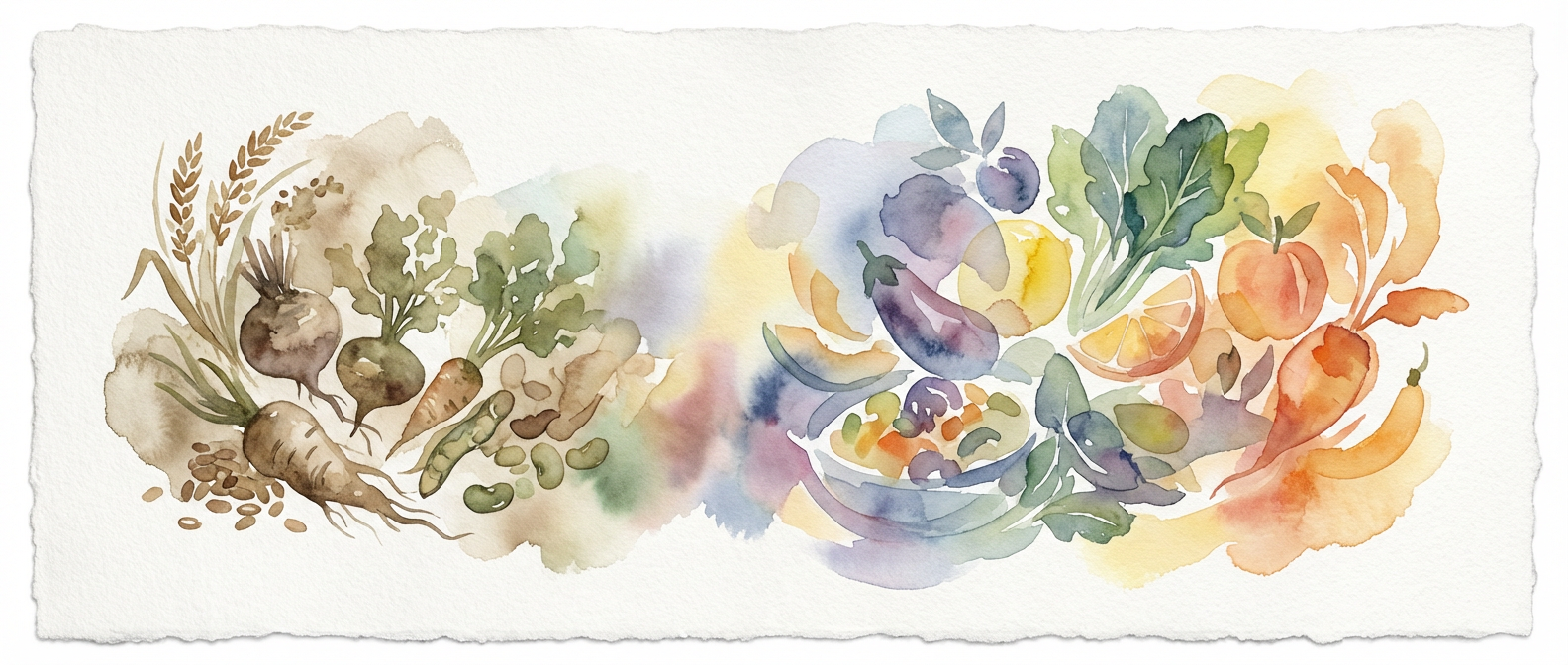
Whole food plant-based eating is growing while ultra-processed alternatives plateau. Tempeh, jackfruit, and legume-forward menus are replacing meat analogues in fine dining. Look at both trends together and a pattern emerges that Good Food Institute research has been tracking from the inside. The conditions are more durable than they first appear, and the implications reach further than the immediate headlines suggest.
To understand why this matters, compare what was true three years ago to what’s true now. The change isn’t just quantitative, it’s qualitative. The participants, infrastructure, and incentive structures have all shifted in ways that build on each other rather than cancel out. That compounding effect is what’s most important to track.
What makes this moment worth careful examination isn’t its novelty but its confirmation. The underlying dynamics have been visible for some time. What’s new is that they’ve reached a threshold where ignoring them requires active effort rather than simple inattention. That threshold crossing is the real event, not the underlying movement that produced it.
The flexitarian category is now the largest dietary identity in the US at 36 percent. This is part of the same picture. These elements don’t exist in separate silos, they’re reinforcing conditions in the same structural shift.
Illustration for What Seasonal and local food advocacy Reveals About Plant-based food evolution past the hype
The Seasonal Argument: The Analysis
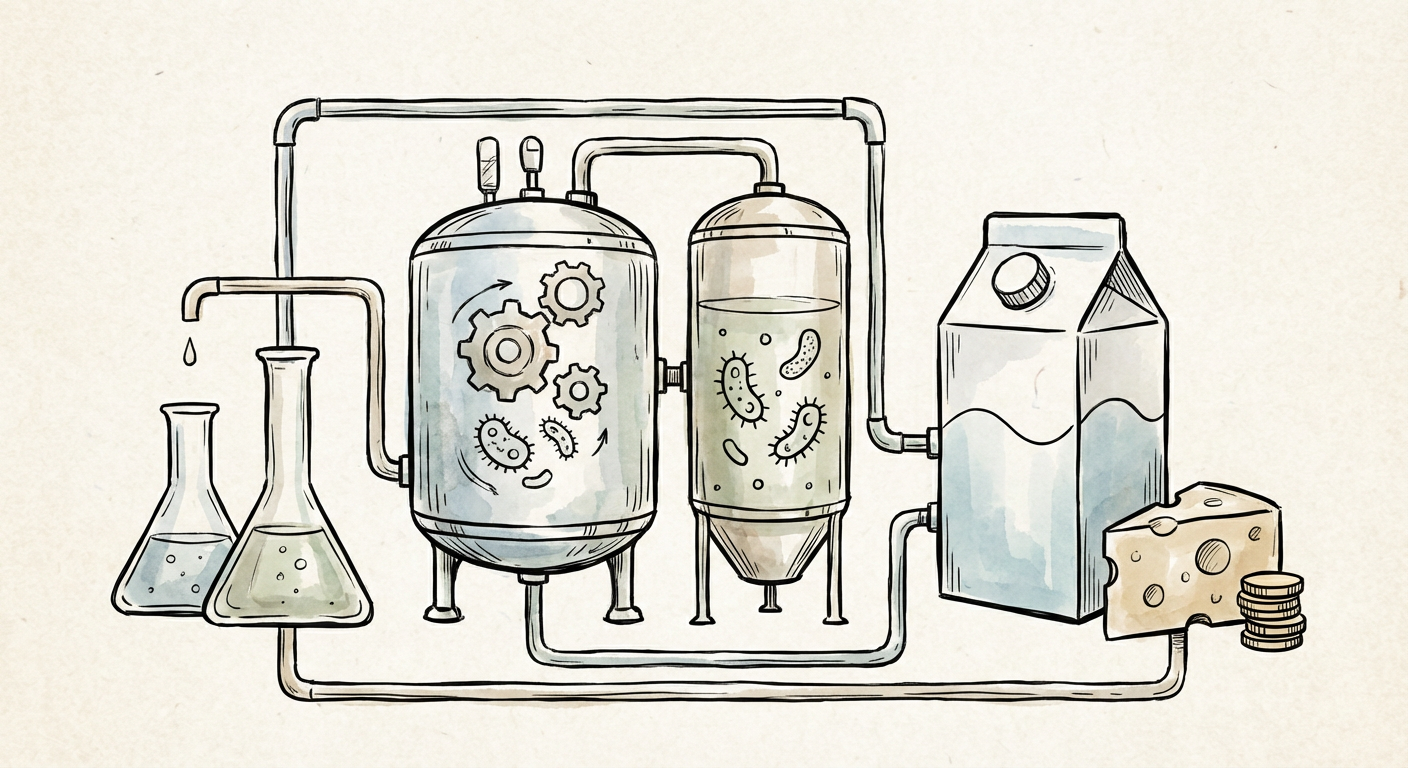
That 36 percent flexitarian statistic is where the analysis gets more specific. The surface reading is accessible and not wrong, but it misses the mechanism. The mechanism is where the practical insight lives. What matters isn’t the headline number but the mechanism behind it: precision fermentation enabling animal-free dairy proteins at competitive cost. Understanding this changes what you do with the information.
Consider what precision fermentation enabling animal-free dairy proteins at competitive cost represents in context. This isn’t a correlation that happened to appear. It’s a downstream consequence of structural factors that have been building. Previous readings of similar situations failed because they treated the symptom as the cause. The structural account is less satisfying as a headline but more useful as an analytical tool.
The comparison to prior cycles is instructive precisely because of where it breaks down. Superficially similar conditions resolved differently in previous iterations because the substrate was different. What school lunch plant-based programs expanding across California and New York represents is a substrate change, the kind that alters the elasticity of the system rather than just its current value. Recognizing that distinction separates analysis from pattern-matching.
The skeptical counterargument deserves honest engagement: prior moments with similar surface characteristics didn’t produce the outcomes that seemed logical at the time. That history is real. What’s different now is school lunch plant-based programs expanding across California and New York, which isn’t a minor variable. It’s the infrastructure condition that previous cycles lacked. Infrastructure changes tend to persist in ways that sentiment-driven changes don’t. Food Navigator plant-based is one source tracking this dimension with the rigor it requires.
There’s also a distributional question that often goes unaddressed in coverage of plant-based food evolution past the hype: who captures the value created by these shifts, and who absorbs the disruption costs? The aggregate picture can be positive while the distribution is uneven in ways that matter enormously to specific participants. Keeping that distributional lens in view is part of reading the situation clearly rather than simply optimistically.
Implications: What This Means If You Care About Seasonal eating
The implications of plant-based food evolution past the hype extend beyond the immediate context. Beyond Meat and Impossible Foods revenue declining after their pandemic peak, combined with the structural conditions described above, creates a situation where adjacent fields, decisions, and communities are affected in ways that aren’t always visible from inside the primary story. The second-order effects are frequently more important than the first-order ones, and they’re where careful attention pays the highest returns.
The frame that matters here, and this is where the analysis departs from mainstream coverage, is that tempeh, jackfruit, and legume-forward menus replacing meat analogues in fine dining is a leading indicator rather than a lagging one. The people positioned to respond to what this signals, rather than to what it confirms, are the ones who will be less surprised by what follows.
The practical response depends heavily on your position relative to the dynamics at play. For those closest to the core of plant-based food evolution past the hype, the implications are immediate and operational. For those at greater distance, the implications are strategic, a matter of understanding which adjacent pressures are building and which assumed stabilities are more fragile than they appear.
The practical question isn’t whether to engage with these dynamics but how. The answer depends on context, on what role you occupy relative to plant-based food evolution past the hype and what your actual decision horizon is. But the first step is the same regardless: accurate understanding of what’s actually happening rather than what the most available narrative says is happening.
A few concrete observations are worth separating out from the broader analysis. First: whole food plant-based eating growing while ultra-processed alternatives plateau isn’t a temporary condition, it’s a new baseline. Second: precision fermentation enabling animal-free dairy proteins at competitive cost suggests that the adjustment period isn’t over. Third, and most important: the organizations and individuals who are treating the current moment as a new steady state rather than a transition are making a categorization error that will be costly to unwind later.
The Case Against: What the Critics Get Right
Intellectual honesty requires acknowledging the strongest counterarguments, not just the weakest ones. The case against the optimistic reading of plant-based food evolution past the hype isn’t trivial. There are structural vulnerabilities in the current picture that deserve direct engagement rather than dismissal.
The most serious objection is about sustainability. Tempeh, jackfruit, and legume-forward menus replacing meat analogues in fine dining can be read not as a foundation but as a ceiling, a point beyond which growth becomes self-limiting because of the very dynamics that produced it. If the current state has already incorporated most of the available supply of early-adopting participants, the remaining growth curve may be structurally shallower than the recent trajectory implies.
There’s also the policy and regulatory dimension. Beyond Meat and Impossible Foods revenue declining after their pandemic peak describes a condition in a relatively permissive environment. Regulatory responses to the scale implied by these numbers aren’t inevitable, but they aren’t implausible either. Organizations planning as though the current regulatory environment is permanent are making an assumption that the history of fast-growing sectors doesn’t support.
The rebuttal to these concerns isn’t that they’re wrong, it’s that they’re already partially priced into the current state of the field. School lunch plant-based programs expanding across California and New York reflects an environment where participants are already adapting to constraints rather than operating in unconstrained space. The adjustment capacity of the ecosystem is higher than a purely top-down view of the risks suggests.
Looking Forward
The trajectory here is clearer than the pace. Making predictions about when specific thresholds will be crossed is genuinely difficult, and anyone claiming precision about timelines should be treated with skepticism. But the direction, toward Beyond Meat and Impossible Foods revenue declining further and continued development of the conditions described above, is supported by evidence in a way that doesn’t depend on a single variable going right.
School lunch plant-based programs expanding across California and New York is the variable to watch as the leading indicator. Historical patterns suggest it moves first, with broader metrics following with some lag. This doesn’t make the outcome certain, but it makes it readable, and readability is the precondition for good decisions.
Three questions are worth holding as the story develops. First: are the structural conditions that enabled the current state durable, or are they cyclical? Second: who is positioned to benefit from the next phase, and does that differ materially from who benefited in the current phase? Third: what would a clean falsification of the optimistic thesis look like, and is there any evidence of that signal emerging? These questions don’t need answers today, but having asked them changes what you notice in the months ahead.
The analysis holds up under scrutiny, which is the only test that matters. The current moment in plant-based food evolution past the hype is one where people who have built an accurate model of the underlying dynamics are better positioned than those relying on the surface story. Building that model isn’t a quick task, but it’s a tractable one, and this analysis is intended as one input into it.
One of the best things about the current gacha landscape is the sheer variety. There are more quality options available right now than at any point in the genre history, and exploring them is genuinely rewarding.
Gacha game monetization and player spending is one of those topics where the more you dig in, the more layers you find. Global gacha game revenue hit $25 billion in 2025, and that’s not just a number on a spreadsheet. It tells you something real about where this is all going. Throw in the fact that pity systems are now standard across major gacha titles (thanks to years of player complaints), and things get a lot more interesting.
Gacha game monetization and player spending trends: What Is Actually Happening
The Current Landscape
Context matters way more than that headline number. Global gacha game revenue hitting $25 billion in 2025 didn’t happen overnight. It’s the result of years of small improvements, changing player expectations, and big shifts in how this whole space works. To understand where we’re going, you need to look at what got us here, not just where we are.
Pity systems becoming standard across major gacha titles after player advocacy is the kind of change that separates real trends from temporary noise. When you see behavioral shifts this big, you’re looking at something that’ll stick around. The conditions that made it happen (Genshin Impact alone pulled in over $5 billion lifetime revenue by 2025) have been building for years. It’s that convergence that makes right now different from all the previous false starts. Sensor Tower mobile game analytics has been tracking these developments closely.
What makes this shift worth paying attention to is how widespread it is. This isn’t happening in just one region or with one type of player. It’s a structural change in how people engage with and spend money on gacha games. The ripple effects go way beyond the immediate numbers into other industries and cultural patterns.
Illustration for Gacha game monetization and player spending trends: What Is Actually Happening
What The Numbers Actually Mean
Looking at regulatory pressure in Japan and China driving transparency requirements and stopping there misses the bigger picture. Sure, the number itself matters, but what it says about how people behave and how markets work is where the real insight is. We’ve seen similar headline numbers in previous cycles, but they didn’t have the foundation to last. This time the foundation is different.
Here’s how it works: battle pass models supplementing traditional banner revenue isn’t just correlation, it’s causation. When you improve accessibility and quality at this scale, the effects build on each other in ways that simple projections miss. The people actually playing these games consistently say the experience has gotten good enough to justify spending more time and money. That feeling, backed up by hard data, makes me think this trajectory will hold.
I should acknowledge the skeptical view here. Previous momentum in similar spaces has died when conditions changed. That’s a real risk. But free-to-play games getting better because developers are competing harder for player loyalty is the structural difference that makes comparing this to previous cycles incomplete. The infrastructure supporting current growth is materially different from what existed during earlier booms. Infrastructure changes tend to stick around longer than sentiment-driven growth.
The Bigger Picture
Step back far enough and gacha game monetization connects to much bigger patterns in how digital culture evolves. The intersection of technology access, creative expression, and community building has been reshaping entertainment and culture for decades. What we’re seeing now might be the latest and most significant version of that pattern.
Genshin Impact generating over $5 billion lifetime revenue by 2025 is the kind of development that creates ripple effects. It doesn’t just affect the people playing the game, but the whole ecosystem of related industries, creative communities, and economic structures around it. When Pocket Gamer industry news covers these developments, they increasingly focus on these secondary effects. That’s a sign the analysis is getting more sophisticated alongside the phenomenon itself.
For anyone trying to understand where this is heading, the question isn’t whether current momentum continues (the evidence strongly suggests it will), but what the second-order effects look like. Industries that seem completely separate from gacha games today will find themselves responding to changes that started here. The organizations and people who spot those connections early will have real advantages.
Looking Forward
Making predictions here requires being humble about timing and confident about direction. Timing is unpredictable. External shocks, regulatory decisions, and tech breakthroughs can speed things up or slow them down in ways no model captures well. But direction is clear: global gacha game revenue hitting $25 billion in 2025, combined with regulatory pressure pushing transparency, creates momentum toward continued growth and increased cultural relevance.
The most important thing to watch going forward is free-to-play games getting better as developers compete for player loyalty. This is the leading indicator that’ll tell you whether current momentum continues or whether the growth curve starts flattening. Historical data suggests that when this variable moves up, broader metrics follow with a three to six month lag. It’s the single best predictor of medium-term direction.
For anyone engaging with this space (whether as players, investors, or observers), this moment represents a turning point worth attention. The decisions key players make in the next twelve months will shape the landscape for years. Understanding these dynamics is the difference between being positioned for what comes next and being caught off guard.
Keeping up with changes across gacha gaming and mobile entertainment is basically a full-time job. zerosanity.app does a lot of that work for you. Worth checking out if these topics are on your radar.
Hey there, fellow tech enthusiasts! Grab your favorite beverage, plop onto your comfiest chair, and let’s talk about the weird and wonderful world of robotics. No, I’m not talking about robot vacuums stuck under the couch. Today, we’re talking about something much more futuristic and exciting: robotic companions. Think Rosie from “The Jetsons,” but with fewer quippy one-liners and more companionable support (at least for now).
A New Era of Interaction
We’re living in a time where the line between human and machine interaction is getting pretty blurry. Robotic companions are popping up as potential friends, helpers, and partners in our daily lives. Companies like Boston Dynamics and SoftBank are leading the charge with creations that don’t just serve us, but actually try to engage with us on a personal level. With AI getting smarter by the minute, it’s not too hard to imagine a world where your morning coffee chat is with a bot that remembers exactly how you like your latte.
Real-life Examples: More Than a Tin Can with Wheels
Take Sophia, the humanoid robot developed by Hanson Robotics. She can hold a conversation and somehow managed to get citizenship in Saudi Arabia. Sure, she might need work on her punchlines, but it’s pretty wild for a robot to be on the world stage like that. Then there’s Jibo, this lovable little guy designed to be your tech-savvy friend. He offered reminders, entertained kids, and even snapped family photos. Jibo’s journey hit some rough patches and he didn’t make it, but he proved there’s real hunger for more personal robots in our homes.
The Tech Behind the Magic
So what makes these robots tick (or not tick, for the more advanced ones)? It’s basically a mix of AI, machine learning, and sensor technology. When you combine these advances, robots can process natural language, recognize faces, and learn behaviors that make their interactions feel more meaningful.
AI: The Brain
Artificial Intelligence is what gives robots the ability to process and respond to human interaction. Companies like OpenAI are pushing boundaries by creating AI models that can mimic human conversation pretty convincingly. Can you imagine a robot that actually understands sarcasm? That might give even the most advanced humans a run for their money.
Sensors: The Senses
These robots come packed with sensors that work like human senses. Cameras for sight, microphones for hearing, and touch sensors let them interact with the world in a tangible way. The whole point is creating an experience that feels organic and natural for us humans.
Implications: The Ups, Downs, and All Arounds
With great tech breakthroughs come great responsibilities, and naturally, tons of questions.
The Positive Side: Companionship and Care
The potential benefits are pretty incredible. For elderly people or those with disabilities, robotic companions could offer independence that wasn’t possible before. Imagine a robot that can chat with a patient, remind them about medication, and even call for help when needed. This could completely change how we think about care, making it both more personal and efficient.
The Concerns: Privacy, Ethics, and the Humanity Factor
But robotic companions also open up a whole can of worms when it comes to ethics and privacy. How do we make sure these machines don’t accidentally (or intentionally) record sensitive information? There’s also this bigger question that honestly keeps me up at night: what happens to human interactions when we start forming real bonds with machines? It’s a brave new world, and I’m not sure we’ve thought through all the implications.
Looking Ahead: The Future is Closer Than We Think
Here’s where I get to indulge in some speculation. Looking ahead, I don’t think it’s crazy to imagine that robotic companions could become as common as smartphones within the next decade. They might be customized to match our quirks, preferences, and even our sense of humor.
Add virtual reality and augmented reality to the mix, and interactions could get taken to a whole new level. We’re talking about environments that could enhance our connection with these machines. Picture having a cozy chat with your robot on a virtual sunny beach when outside it’s sleeting. Technology might actually make that possible.
Conclusion: Embracing the Bots
Whether you’re excited or freaked out about robotic companions, one thing’s certain: it’s going to be a wild ride. As they say, with great power comes great curiosity (okay, I totally paraphrased that).
The tools to create a more connected, efficient, and maybe even utopian future are right here. So maybe it’s time to welcome these metal friends into our homes and lives. Who knows, your best buddy in 2030 might be a witty android that absolutely loves your terrible dad jokes.
Hey fellow technophiles! Today, I’m beyond excited to talk about a topic that’s been making waves and turning heads—blockchain. Yeah, I know, I know. You might be thinking, “Isn’t blockchain the thing behind Bitcoin and all those other cryptocurrencies?” Yes, that’s part of it, but there’s a whole universe unfolding beyond just cryptocurrency. It’s like when we first realized the internet wasn’t just for sending emails. I promise, you’re gonna want to stick around to see where this techno-utopian journey takes us.
The Beating Heart: How Blockchain Works
So, let’s cut through the jargon soup and break this down. At its core, blockchain is a decentralized ledger system—a fancy tech word for “a super secure way to store data.” Imagine a massive, transparent, decentralized, and immutable Excel sheet, except this one is distributed across countless computers worldwide. No single entity owns it, nobody can alter past records without detection, and every participant has a copy. No more sneaky rule changes mid-game.
The beauty of blockchain? It’s trustless, meaning you don’t have to know or trust the other person in the transaction. This system relies on cryptographic principles to safeguard interactions, like if your diary had Fort Knox level security and only you had the key. It’s a game changer for industries where trust matters most.
From Cryptocurrencies to Disruptive Dapps
Let’s chat about applications because this is where stuff gets really cool. The first blockchain success story was, of course, Bitcoin. It redefined money as we know it, giving birth to a digital gold rush and blockchain fervor. But the real revolution lies in decentralized applications, or dapps.
Ethereum is the name of the game here, introducing the concept of smart contracts. These are self-executing contracts with the terms written directly into lines of code. Imagine setting up a vending machine that checks if you dropped enough coins before dispensing your soda. That’s a smart contract for you!
We’re seeing dapps pop up in every corner. DeFi (decentralized finance) aims to overthrow traditional banks. Supply chain management ensures your organic avocado really came from that sunny Californian farm. Anything relying on middlemen? Blockchain’s probably coming for their job, and quite frankly, it’s doing it with style.
Beyond the Hype: Real-World Implications and Challenges
Alright, let’s pump the brakes for a sec. Not everything is hugs and rainbows in blockchain land. The tech, while revolutionary, faces legit challenges. Scalability is the elephant in the room. The Ethereum network, for instance, processes a fraction of transactions per second compared to super-systems like Visa. Imagine a Friday night pizza order queue—no bueno.
Environmental concerns are also real. The energy consumption of proof-of-work consensus mechanisms would make Captain Planet weep. That’s why there’s a hard push towards proof-of-stake and other innovative solutions to ditch the massive carbon footprints.
Then there’s the regulatory black cloud looming over crypto-assets and blockchains worldwide. Governments are struggling to keep up with decentralized identity and anonymity—a nightmare for regulators and a dream for privacy advocates.
The Visionary Future: Why I’m Optimistic
Let’s bust out the crystal ball, shall we? I like to fantasize about what a fully bloomed blockchain era would look like. Picture this: a world where fraud is a relic, supply chains are transparent, and overseas transfers are as direct as sending a Snapchat.
The shift to Web3, a decentralized internet platform powered by blockchain, is like trading in your bicycle for a teleportation device. It promises user ownership and control, nixing data casualties to big corporate beasts. Think Facebook, but owned by everyone and no creepy data hoarding.
Blockchain is also poised to crush it in terms of social impact. From decentralized identity verification in regions lacking robust systems to making solar energy markets locally competitive. Yeah, it’s futuristic, almost sci-fi, but believable in this space.
Wrapping It Up: The Blockchain Bandwagon
So, here we are, staring at a promising future with blockchain in the driver’s seat. Sure, there are potholes along the way but if there’s anything we’ve learned from past tech revolutions, it’s that innovation waits for no man—or challenge.
Whether for financial freedom, increased transparency, or chopping the middlemen to smithereens, blockchain is here to stay and remodel the norms. It’s like watching a plot twist in your favorite series—you can’t wait to see what happens next, can you?
So, strap in and maybe grab some popcorn. The blockchain ride is just getting started and, trust me, you wouldn’t wanna miss out.
Stay curious, stay informed, and remember, the blockchain renaissance is upon us and it’s looking dope!
Catch you in the next post!
P.S. Next time, maybe we’ll ponder about AI taking over as the next Picasso. Spoiler: they might just be better than we think!
Hey there, fellow tech aficionados! Today, I’ve got something insanely cool to share with you that’s been buzzing in my mind for a while now. It’s all about how Artificial Intelligence—yup, our silicon-based friend—is redefining the boundaries of creative expression. We’re diving deep into AI in the arts today, and trust me, you won’t want to miss this ride.
The Digital Picasso: When Machines Learn to Paint
We’re living in a wild time where art and technology seem to have hopped on the same wild roller coaster. Maybe you’ve already seen some of those AI-generated images that have taken the internet by storm—like realistic yet mind-bending portraits or abstract landscapes that rival any contemporary human artist. Companies like OpenAI, with their DALL-E 2, and DeepArt are leading this tech revolution, and it’s pretty much like giving a paintbrush to a computer and saying, “Go make me something fabulous!” And believe it, they’re pulling it off.
What gets me excited isn’t just that these AI tools can create pieces that look good. It’s that they’re pushing us to ask fundamental questions about what art is. As an art lover myself, I’ve always appreciated the deeply human connection behind each brushstroke. But these generative art AIs are forcing me to rethink that definition. I mean, if a machine can evoke the same emotions through its creations, do we redefine what we consider an artist? Or do we expand our understanding of creativity altogether?
Artists of the Future: Humans or Machines?
Here’s where things get juicy. As a species, I think we’ve always been a little scared that machines might take over our jobs. (Okay, maybe more than a little). But the creative field? That always felt kind of sacred, a last frontier that only human emotion and experience could conquer.
However, AI isn’t just painting landscapes at this point. It’s writing novels and even making music that slaps. There are fantastic collaborations out there where human artists feed AI systems with their ideas, letting the machine come up with designs they might not have envisioned on their own. It’s like having an extraterrestrial artist apprentice that takes your innovation to the next level. Pretty sweet, right?
The wild advantage here is the pace at which AI evolves. Unlike us fleshy humans, who still joke about machines never getting tired of 9 to 5s, AI can churn out content non-stop. It can shift styles, experiment endlessly, and practically live in its own R&D lab of creativity.
Challenges and Concerns: Of Pixels and Ethics
But, of course, it’s not all sunshine and virtual rainbows. As we plunge into this brave new world, we’re hitting some substantial ethical roadblocks, too. How do we credit the creators—both human and machine—without stepping on IP toes? Who owns the rights to something concocted in the mind of an AI? There’s a legal gray area there that’s about as murky as a mug of gas station coffee.
And let’s not forget the nature of the inputs feeding these AI systems. Bias in AI has been a hot topic for a while now, and the arts are no exception. The datasets and algorithms shaping these AIs often reflect their programmers’ ideas—and biases. As a result, if we’re not careful, we risk losing diversity in artistry, creating echo chambers of creativity rather than rich, multicultural collaborations.
Looking Ahead: An Artistic Utopia?
Imagine a future where every person has an AI muse by their side. You could whisper your wildest visions and watch them transform into a masterstroke with the click of a button. This would democratize creativity, providing access to those who’d never dare to pick up a paintbrush themselves—artists, dreamers, and the creatively curious.
The prospect is tantalizing but requires caution. One challenge is making sure these tools are accessible and not just another playground for the well-funded tech giants. That’s a key conversation we need to have to build a fair space that lifts all creative boats.
Conclusion: The Art of Possibility
There you have it, friends: a whirlwind tour through a world where AI and art hold hands and leap into a realm beyond our traditional canvas. It’s thrilling, daunting, and inspiring all at once. Plus, it creates room for all kinds of creative souls—whether one’s alliance leans human, artificial, or somewhere beautifully in-between.
In the spirit of artistic innovation, I’ll leave you with a question: If an AI could create anything you imagined, what would you ask it to make first?
As always, stay curious, and let your imagination fly as freely as ever.
Catch you on the next wave of tech wonder!
Cheers,
[Your Name]
P.S. We’re in an age where even our robots can become artists. I’d say the future is paint-brushes-down provocatively unexpected—wouldn’t you agree?