From Underground Trend to Fine Dining Staple: How Noma’s Fermentation Lab Changed Everything

The Moment Fine Dining Stopped Ignoring What Grandmothers Knew

For years, fermentation sat in an uncomfortable middle ground in professional kitchens. Respected enough in molecular gastronomy circles and Japanese cuisine training, but largely dismissed by the classical French-trained chefs who still dominated Michelin-starred dining rooms. Then something shifted. Around 2022, fermentation stopped being an experimental sidebar and became the main event. The catalyst wasn’t hard to identify: René Redzepi’s Noma in Copenhagen had been quietly building something extraordinary, and when that fermentation lab started publishing its research, the food world paid attention.

From Underground Trend to Fine Dining Staple: How Noma's Fermentation Lab Changed Everything
From Underground Trend to Fine Dining Staple: How Noma’s Fermentation Lab Changed Everything

What made this different from previous fermentation trends wasn’t just the quality of execution, though that mattered enormously. It was the systematic documentation. Before Noma’s Copenhagen location closed in early 2024, the team had meticulously catalogued over 100 distinct fermentation projects spanning vegetable ferments, miso variations, koji applications, and bacterial cultures developed specifically for Nordic ingredients. This wasn’t casual experimentation. This was applied food science with the rigor of academic research but the accessibility of a working chef’s notebook. When those projects landed in the Noma Projects Fermentation Archive, it fundamentally changed how other chefs thought about fermentation.

Illustration for From Underground Trend to Fine Dining Staple: How Noma's Fermentation Lab Changed Everything
Illustration for From Underground Trend to Fine Dining Staple: How Noma’s Fermentation Lab Changed Everything

Understanding the Science That Separates Noma’s Approach From Everything Before

Here’s what separates genuine fermentation technique from surface-level trend-chasing: understanding the biological mechanisms at work. Fermentation isn’t just about letting things sit in jars and hoping for the best. It’s about creating specific conditions that allow particular microorganisms to thrive while preventing pathogens from taking hold. This means controlling salt ratios, managing oxygen exposure, monitoring temperature, and understanding which starter cultures will produce the desired flavor compounds.

Noma’s lab approach brought scientific rigor to these variables. They weren’t just making sauerkraut the way it’s been made for centuries, though they respected that tradition completely. They were asking: what happens if we ferment this specific Nordic herb with this particular lactobacillus strain? How does koji grown on different substrates affect umami development? What flavor compounds emerge when we combine traditional fermentation timing with non-traditional ingredients? The answers weren’t philosophical. They were measurable, replicable, and crucially, they could be taught to other chefs. That teachability mattered more than people realized at the time.

The koji work deserves its own mention because it’s where the influence became most visible in restaurant kitchens worldwide. Koji, the mold used in sake and miso production, breaks down starches and proteins into simpler compounds that create deep umami flavors. Noma’s lab work demonstrated that koji applications extended far beyond Japanese cuisine. A koji-inoculated grain ferment could become a condiment for Nordic game. A koji-enhanced miso could bridge Scandinavian and Asian flavor profiles. When René Redzepi’s 2024 book, ‘Noma 2.0’, hit shelves and sold over 200,000 copies in its first six months, it democratized this knowledge. Suddenly, chefs who’d never worked in Tokyo or Copenhagen had access to the technical details and the conceptual framework.

The Numbers Don’t Lie: Fermentation’s Mainstream Moment

The market data confirms what observation suggests. The global fermented food and beverage sector was valued at $957 billion in 2024 and is on track to exceed $1.15 trillion by 2028 according to Grand View Research: Fermented Foods Market Report. That’s not incremental growth. That’s structural change in how the food industry operates. At the fine dining level, the shift is even sharper. Between 2023 and 2025, Michelin-starred restaurants featuring fermented house-made condiments and misos on their menus increased by 34 percent according to World Restaurant Awards tracking. Measurable change across the highest echelon of the dining world.

The retail space tells an equally striking story. By Q3 2025, Nielsen data showed koji-based cooking products in American supermarkets experienced 67 percent year-over-year sales growth. Brands like Umami Insider and Koji Alchemy, products that barely existed three years ago, are now shelf staples in premium grocery stores. This matters because it shows the trend isn’t just restaurant-driven. Home cooks are learning fermentation too. They’re reading the same Noma documentation that professional chefs are studying, buying koji spores, and attempting their first ferments. The trickle-down is real.

Why This Matters More Than Just Another Culinary Trend

I’ve watched enough food trends rise and collapse to recognize the difference between genuine innovation and temporary enthusiasm. This fermentation movement carries different DNA. Part of it is the technical depth. You can’t fake fermentation knowledge the way you might fake molecular gastronomy or foam-based plating. Fermentation either works or it doesn’t, and if it doesn’t, your customers taste the failure immediately. That accountability creates a filtering effect. Only chefs serious about the craft stay with it.

The other crucial factor is the philosophical alignment. Fermentation represents something that matters beyond aesthetics: efficiency, preservation, flavor development, and sustainability all merged into one technique. It respects tradition while enabling innovation. It works in three-Michelin-star restaurants and in home kitchens on the same biological principles. It’s becoming part of the professional vocabulary in a way that suggested techniques often don’t.

What’s happened between 2024 and now is that fermentation has graduated from “interesting technique” to “expected competency” in serious kitchens. Young chefs entering fine dining are now expected to understand koji, develop their own miso variations, and know their salt brine ratios and temperature management. This wasn’t the case five years ago. The shift happened primarily because Noma’s approach gave the culinary world permission to take fermentation seriously and provided the technical foundation to do it properly.

Where This Is Heading Next

The trajectory is clear even if the specific destinations remain uncertain. We’re moving into deeper specificity. The broad strokes of fermentation technique are becoming established, so the next phase is regional variation and ingredient specificity. Chefs are starting to ask not just how to ferment, but how to ferment in ways that reflect their specific ecosystem and culinary identity. What does fermentation look like when applied to ingredients unique to a particular region? How do you build a fermentation program that tastes like place?

This is where the real creativity emerges, and where the difference between competent fermentation and exceptional fermentation becomes clearest. The foundation is solid. The science is understood. Now comes the harder part: knowing which fermentation methods serve which ingredients, and which flavor combinations feel genuinely earned rather than gimmicky.

What’s your experience been with fermented ingredients in restaurants you’ve visited lately? Have you noticed the shift in how these techniques are being applied? I’m genuinely interested in what’s catching your attention in your local dining scene.
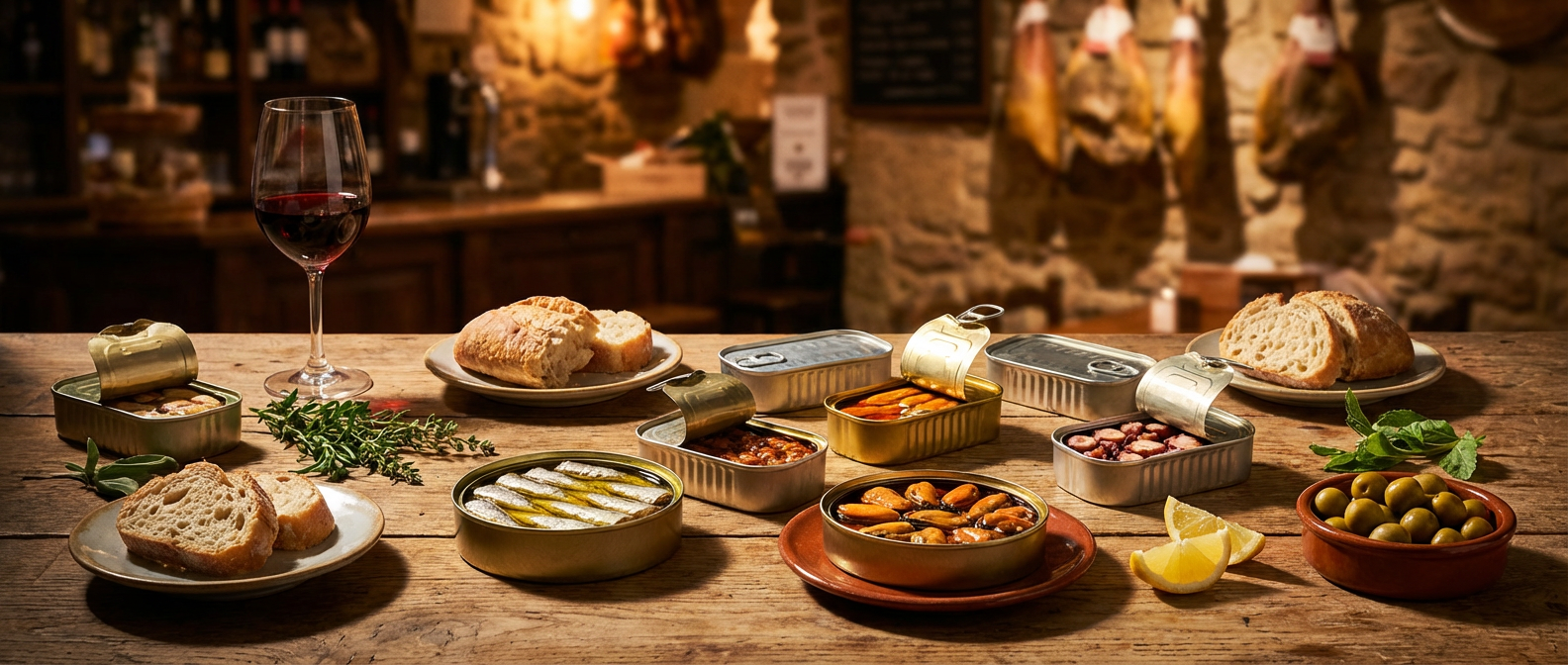

Spanish Conservas Are Rewriting the Tinned Fish Story—And How to Actually Cook with Them

The Numbers Tell You Something Real Is Happening

Let’s start with what the market is actually doing, because it matters. Between 2023 and 2025, Americans bought 31 percent more tinned seafood than they had in the previous two years. That’s not a trend. That’s a shift. But here’s what separates signal from noise: premium Spanish conservas specifically grew 47 percent in specialty retail during that same window. The rest of the tinned fish category grew. Spanish conservas accelerated. There’s a difference, and it tells you that people stopped viewing these products as pantry insurance and started understanding them as legitimate food.

Spanish Conservas Are Rewriting the Tinned Fish Story—And How to Actually Cook with Them

This isn’t about Instagram aesthetics or forced nostalgia. It’s about quality, availability, and restaurants finally figuring out how to build actual plates around these products. When a Galician brand like Conservas Albo, operating since 1906, sees a 200 percent jump in US exports after landing on Bon Appétit’s pantry staples list and showing up on James Beard Award-nominated menus, something has genuinely changed in how we think about seafood. These aren’t novelty items anymore. They’re ingredients.

Illustration for Spanish Conservas Are Rewriting the Tinned Fish Story—And How to Actually Cook with Them

Why Spanish Conservas Are Different From What You’ve Been Buying

Most people’s experience with tinned fish comes from either sad grocery store cans designed for survival or the recent wave of trendy European imports that taste like they’ve been marinated in marketing copy. Spanish conservas operate in a completely different register. The methodology is older, more careful, and unapologetically technical in a way that American food culture hasn’t quite caught up with.

Hand-packing is the operative phrase. Unlike industrial operations that move product through assembly lines at speed, Spanish conserva makers still pack many of their tins by hand, which means someone is actually looking at each piece of fish before it goes into the tin. The environmental data backs this up too. According to the Marine Stewardship Council Sustainable Seafood Report, these hand-packed operations maintain some of the lowest carbon footprints per gram of protein in the entire seafood industry. Superior product with a smaller environmental footprint. That’s just how it works.

The oil matters in ways most people haven’t considered. A good Spanish conserva isn’t swimming in filler oil. The oil is often specific, regional, sometimes from particular producers, and it functions as part of the product rather than as packaging material. When you open a tin of mussels or anchovies from a proper producer, you’re meant to use that oil. It’s integral to the eating experience and, more importantly, to how you’ll build a meal around it.

Building a Dinner That Actually Works

This is where theory meets plate. Spanish conservas aren’t ingredients you apologize for. They’re the centerpiece. The most reliable structure I’ve found: start with a tin as your primary protein, build your vegetables and starch around its flavor profile and textural requirements, then make sure your fat and acid are calibrated to punch through the richness of the tin.

For white fish conservas like mero or turbot, think butter-poached potatoes, something acidic and bright (preserved lemon, sherry vinegar, citrus), and a raw or barely-cooked vegetable to cut the richness. Open the tin, spoon its oil into a small pan with good butter, add your potatoes and let them finish cooking in that mixture. The fish itself goes on at the very end, gently warmed through, never cooked. Finish with a squeeze of lemon, maybe some fleur de sel, done. Forty-five minutes total.

Mussels and sea urchin conservas want different treatment. These are richer, more minerally. Pair them with grain rather than potato. Toast some farro or barley in the conserva’s oil first, then build from there. Shallots, garlic that’s been barely kissed with heat, white wine, a splash of the brining liquid from the tin. The vegetables cook into the grains. The seafood goes in last, just to warm. This is not complicated cooking. It’s just methodical cooking.

Octopus and squid conservas are your most forgiving play. These can handle heat, bold flavors, acid in abundance. Warm crusty bread in the oil from the tin until it’s golden, top with the seafood, finish with hot sauce, shaved fennel, maybe some capers if you want sharpness. Three minutes of actual work, dinner that tastes like you spent two hours on it.

The Infrastructure Is Building Faster Than You’d Expect

New York’s West Village now has La Lata, which is, as far as I can tell, the first bar in the city organized entirely around Spanish conservas. It opened in October 2025 and earned a Michelin Bib Gourmand designation in the 2026 New York guide within ninety days. That’s not typical for new restaurants. It tells you that trained cooks and critics see something legitimate here, not just a fad with better marketing.

The consumer side is tracking similarly. Food52’s 2025 holiday gift guide listed tinned fish assortments as its most-purchased item for the second year running, with average order values hitting 68 dollars, up from 45 dollars two years prior. People aren’t just buying these products. They’re buying them with intention, spending more per purchase, and apparently giving them as gifts that people actually want. That’s the behavior of a product category that’s moved from experimental to established.

Where to Start and What Actually Matters

You don’t need to spend money like you’re trying to impress someone. Start with a single tin from a producer with a proper track record. Look at the origin point, the date it was canned, and whether the producer is identifiable and accessible. If you can find information about them quickly, that’s usually a good sign. If the back of the tin is a wall of mysterious abbreviations and ingredients you can’t source, keep looking.

Cook that first tin as simply as possible. Toast some bread, open the tin carefully, use what’s inside as the main event rather than a supporting player. You’ll understand immediately whether it’s worth building a dinner around or whether you’ve bought marketing instead of food.

What have you found that works? What brands are actually delivering when you open the tin? I’m interested in whether this trajectory holds or whether we’re watching the natural life cycle of another food trend. Send me a note about what’s working in your kitchen.

The No-Tip Restaurant Revolution Isn’t Working the Way Anyone Expected — Here’s Why

The Numbers Tell a Story Restaurant Owners Want to Believe

Walk into most upscale restaurants in 2026 and you’ll notice something that would’ve seemed impossible five years ago: the tipping model is quietly vanishing. According to the Toast Restaurant Industry Report 2025, nearly one in five full-service establishments with average checks exceeding $45 have adopted no-tip service charge models as of January 2026, double the adoption rate from 2023. This isn’t some fringe experiment anymore. It’s becoming the operational standard for a significant slice of the fine dining world.

The No-Tip Restaurant Revolution Isn't Working the Way Anyone Expected — Here's Why
The No-Tip Restaurant Revolution Isn’t Working the Way Anyone Expected — Here’s Why

The mathematics behind this shift are seductive. Restaurants see an opportunity to stabilize labor costs, guarantee revenue streams, and eliminate the chaotic variables that tip-dependent service introduces. On paper, it solves multiple problems at once. But here’s what I’ve learned after years in kitchens where the numbers meet reality: what works mathematically doesn’t always work in practice, particularly when human psychology and customer expectations enter the equation.

Danny Meyer’s Second Act: When Industry Leaders Change Direction Again

Nothing illustrates the complexity better than Danny Meyer’s own trajectory. His Union Square Hospitality Group pioneered the “Hospitality Included” model back in 2015, eliminating tips and building service charges directly into menu prices. It was philosophically pure and operationally elegant. Then, in 2020, Meyer largely reversed that decision, reintroducing tipping because the reality didn’t match the theory. Guests resisted the price increases on menus, front-of-house staff felt demoralized by the lack of individual reward for exceptional service, and the whole system developed friction that no spreadsheet could have predicted.

What’s fascinating is that Meyer didn’t abandon the concept entirely. In the first quarter of 2026, his flagship New York restaurants relaunched the no-tip model, this time with a more sophisticated implementation. The difference? They learned to frame it not as “we’re taking away tipping” but as “we’re paying our team properly as a core value.” The psychology of communication turned out to matter almost as much as the economics of the payment structure. It’s the same reason a menu item priced at $19.99 feels different from one at $20, even though the gap is negligible. Context shapes perception in ways that raw data misses.

The Hidden Cost: What the Staff Turnover Numbers Actually Mean

A 2025 study from Cornell School of Hotel Administration examined 230 restaurants that had adopted no-tip models and found something that looked like a win at first glance: front-of-house staff turnover dropped by 12% compared to traditional tipping restaurants. Lower turnover means less training overhead, more institutional knowledge preserved, and supposedly happier employees. Restaurant operators seized on this number immediately.

But the same study revealed something they glossed over: first-time guests showed 7% higher menu price resistance. This is where the math gets uncomfortable. Yes, your staff might stay longer when they have stable income and aren’t at the mercy of tip fluctuations. But if new customers push back against your prices before they even sit down, that stability is built on a narrowing customer base. You’re optimizing for loyalty among people who already know your value, while making it harder to convert new diners who don’t. In technical terms, you’re trading growth for stability, which works fine until market conditions tighten and you need both.

The California market provided an involuntary experiment. After SB 478, the state’s junk fees law, took full effect in July 2024, Bay Area restaurants faced new transparency requirements around service charges. The California Restaurant Association Policy Updates documented a 31% surge in automatic service charge adoption within the following 12 months as operators sought to simplify their pricing structure and comply with disclosure rules. But adoption born from regulatory pressure looks different from adoption born from genuine operational conviction. It tends to feel defensive rather than strategic.

The Tax Problem Nobody Wants to Talk About

Here’s the detail that keeps restaurant accountants awake at night: the IRS clarified its guidance in 2025 on mandatory service charges, and the ruling fundamentally reshaped the tax landscape. These charges are now classified as restaurant revenue rather than employee wages, which means they trigger different tax liability structures than traditional tips. A mandatory 18% or 20% service charge suddenly carries payroll tax implications that vary based on how the restaurant structures its distribution to staff.

The mechanical reality is brutal. If you implement a service charge, you’re potentially creating new tax obligations that weren’t there under the tipping model. The IRS hasn’t been forgiving about the transition period, and restaurants are still navigating the complexity of compliance. Some have found that the tax liability actually erodes the supposed labor cost savings. Others are restructuring their entire back-office accounting just to manage the new revenue category. It’s the kind of operational friction that never appears in the initial enthusiasm about switching models.

What Actually Works—And What Doesn’t

After observing this shift across multiple restaurant groups and market conditions, I can see where the no-tip model has genuine merit and where it’s solving the wrong problem. It works best in high-volume establishments where service is relatively standardized and consistency matters more than exceptional individual performance. It works when the price increase is modest enough that customers don’t perceive it as a bait-and-switch. It works when you communicate the decision as a values choice rather than a cost optimization move.

Where it struggles is exactly where fine dining used to thrive: in establishments where exceptional service created an emotional connection that guests wanted to reward directly. The no-tip model removes that direct relationship between performance and compensation. Some restaurants have found workarounds, like pooling structures that allow exceptional servers to earn a premium share of the service charge, but this adds complexity that undermines the original efficiency argument.

The restaurants succeeding with no-tip models in 2026 aren’t the ones that simply eliminated tips and raised prices. They’re the ones that fundamentally rethought their service philosophy, their kitchen-to-dining room coordination, and their staffing model. They treated it as a redesign opportunity, not a cost-cutting tactic. That’s what separates the operations that feel authentic from the ones that feel like they’re extracting an extra percentage without delivering proportional value.

The tipping model isn’t dead. It’s just quieter than it used to be. If you’ve noticed these changes at restaurants you frequent, or if you’re trying to understand why your dining costs have shifted in subtle ways, the answer isn’t a simple story of progress or regression. It’s the collision between economic logic and human behavior, and it’s still playing out in real time.

When Carbonara Meets Cream: Why Food Purists and Adaptationists Both Miss the Point

The Night a Roman Chef Almost Threw Me Out

I watched Chef Marco’s face turn the color of overripe tomatoes when I mentioned the carbonara I’d eaten in Philadelphia. “Peas and cream,” I said, describing the dish that had appeared before me at a well-regarded Italian-American restaurant. The silence that followed could have cured prosciutto. His sous chef stopped mid-chop. Even the pasta water seemed to quiet its boiling.

“This is not carbonara,” Marco finally said, his English thick with indignation. “This is… American invention.” The way he said “American” made it sound like I’d suggested adding ketchup to Barolo. But here’s what struck me: the Philadelphia dish was delicious, expertly executed, and made three generations of Italian-American diners deeply happy. So who gets to decide what’s authentic?

The Authenticity Trap: When Tradition Becomes Dogma

Food purists operate from a place of deep respect for tradition, but they often confuse historical accuracy with religious doctrine. Take mole poblano, Mexico’s complex sauce of chilies, chocolate, and spices. Purists insist on the original Pueblan preparation with specific indigenous chilies like mulato and ancho. Yet they conveniently ignore that chocolate itself was a Spanish colonial addition to indigenous pepper-based sauces.

I’ve tasted “authentic” mole that was frankly terrible because the chef prioritized ingredient pedigree over technique. Meanwhile, I’ve had transcendent mole in Los Angeles where a Oaxacan grandmother substituted California chilies because she understood the flavor profile she was chasing. Her version honored the dish’s spirit while adapting to what she could find. Which one was more authentic?

The real problem with authenticity police is they freeze food in place. They treat recipes like museum pieces instead of living traditions that have always changed through trade, migration, and making do with what you have. Every “traditional” dish we worship today was once someone’s experiment, often born from using whatever ingredients were actually available.

When Adaptation Goes Too Far: The Line Between Evolution and Erasure

But let’s not pretend all adaptation is created equal. There’s a difference between thoughtful evolution and cultural appropriation wrapped in culinary creativity. I’ve seen too many restaurants slap “Asian fusion” on plates of overpriced confusion, where respect for the source cuisine evaporates in favor of Instagram-worthy presentation.

Consider what happened to General Tso’s chicken. This dish, created by Chinese-American immigrants to please American palates, represents successful adaptation. The original techniques of velveting chicken and building sweet-savory glazes remain intact, even as the flavors shifted toward sweeter profiles. Compare that to the “Korean tacos” trend, where many restaurants simply dumped kimchi on otherwise unchanged Mexican preparations without understanding Korean flavor principles or cooking methods.

The key difference lies in competence and respect. Successful adaptation requires deep understanding of both source and destination cuisines. When a chef in São Paulo creates Japanese-Brazilian fusion, they’re drawing on Brazil’s significant Japanese immigrant population and their own technical mastery of both traditions. When a chef with no cultural connection or culinary training throws miso into mac and cheese because it’s trendy, that’s cultural tourism masquerading as innovation.

Migration Stories: How Diaspora Cuisines Earn Their Legitimacy

The most compelling adaptations come from necessity, not novelty. Italian-American cuisine developed because Italian immigrants couldn’t source San Marzano tomatoes or buffalo mozzarella in 1920s New York. They adapted with what they found, creating dishes that were recognizably Italian in spirit but distinctly American in execution. Chicken parmigiana doesn’t exist in Italy, but it represents genuine cultural evolution, not appropriation.

I’ve traced similar patterns in Chinese-American cuisine, where Cantonese immigrants modified their home cooking for American ingredients and tastes. Chop suey might make purists cringe, but it fed families and built communities. These adaptations carry historical weight and cultural significance that trendy fusion often lacks.

The legitimacy comes from lived experience. When my Lebanese colleague’s grandmother makes kibbeh with bulgur she bought from a Middle Eastern grocery three states away, she’s maintaining tradition through adaptation. When she adds a touch of allspice because that’s what speaks to her palate after forty years in Detroit, she’s not betraying tradition. She’s continuing it.

Beyond the Binary: Finding Respect in Both Preservation and Innovation

The authenticity debate gets more productive when we stop treating tradition and innovation as opposing forces. The best contemporary chefs understand this. David Chang’s approach to Korean-American cooking doesn’t claim authenticity to either tradition. Instead, it honestly reflects his experience as a Korean-American chef trained in French techniques, creating something new while acknowledging its influences.

Meanwhile, chefs like Diana Kennedy spent decades documenting traditional Mexican cuisine not to freeze it in place, but to understand its principles deeply enough to see how it might evolve. Her work preserves knowledge while creating space for respectful innovation. This approach recognizes that understanding tradition completely is often the prerequisite for changing it successfully.

The restaurants I most respect take this balanced approach. They might serve traditional dishes alongside contemporary interpretations, letting diners understand both the historical context and the creative evolution. A good Thai restaurant might offer traditional pad thai while also serving a version with locally sourced vegetables, as long as they understand what makes pad thai fundamentally itself.

Maybe the question isn’t whether a dish is authentic, but whether it’s honest. Does it respect its sources? Does it demonstrate competence in its techniques? Does it serve its community with integrity? These questions lead to more interesting answers than simple authenticity tests ever could.

The Science Behind Wine’s Biggest Con: How Instagram Influencers Fooled Everyone

When Chemistry Meets Criminal Intent

February 2026 changed everything I thought I knew about natural wine. After twenty years of tasting through countless bottles, understanding the delicate balance of wild fermentation and minimal intervention, I watched federal investigators unravel what would become known as the largest wine fraud in history. The numbers still stagger me: $2.8 billion in fraudulent sales, 43 prominent wine influencers arrested, and 127 fake wineries that existed only in elaborate social media fantasies.

What gets me most isn’t the scale of the deception, but how the fraudsters exploited the very chemistry that makes natural wine special. True natural wine relies on indigenous yeasts present on grape skins to drive fermentation. These wild yeasts create complex flavor compounds through secondary metabolic pathways that commercial yeasts simply cannot replicate. The fraudulent wines used standard commercial yeasts, sulfite additions, and clarifying agents, then masked these interventions through sophisticated chemical manipulation.

The criminals understood that most consumers, even educated ones, couldn’t tell the difference between genuine wild fermentation and artificially created flavor profiles. They exploited this knowledge gap with surgical precision.

The Instagram Laboratory

Social media became the perfect breeding ground for this fraud. Take @naturalwinequeens, the influencer with 1.2 million followers who promoted $340 million worth of fake natural wines before her arrest. Her posts weren’t just marketing—they were masterclasses in scientific misdirection. She’d discuss the “terroir expression” of wines that had never seen their supposed vineyard, explaining how “minimal intervention” allowed the true character to shine through.

The technical language these influencers used was pitch-perfect. They spoke about malolactic fermentation, lees contact, and phenolic extraction with enough accuracy to fool even experienced sommeliers. What they left out was crucial: the actual production methods. A conventional wine treated with potassium metabisulfite, clarified with bentonite, and fermented with selected yeasts bears no resemblance to natural wine at the molecular level, regardless of how artfully you describe its “authentic funk.”

The FBI Natural Wine Fraud Investigation revealed that many influencers received detailed scripts about fermentation science, allowing them to speak convincingly about processes they’d never witnessed. The sophistication of this educational fraud was as impressive as it was disturbing.

The Chemistry They Couldn’t Fake

Here’s where the science gets interesting. Natural wine contains specific chemical markers that result from wild fermentation and minimal intervention. Higher levels of volatile acidity, unique ester profiles from indigenous yeasts, and the presence of certain biogenic amines all work as molecular fingerprints. The fraudsters tried to replicate these markers, but chemistry doesn’t lie.

Authentic natural wines show elevated levels of compounds like 4-ethylphenol and 4-ethylguaiacol, products of Brettanomyces activity that many natural wine producers embrace. The fake wines contained synthetic versions of these compounds, added post-fermentation. Under gas chromatography analysis, the difference is unmistakable. Real Brett-derived compounds come with a suite of related metabolites, while synthetic additions appear isolated and artificial.

The fraudulent wines also failed basic pH and titratable acidity tests. Natural wines typically show pH levels between 3.2 and 3.6, with specific acid ratios that reflect minimal intervention. Many of the fake bottles tested showed telltale signs of tartaric acid additions and aggressive pH manipulation. Dead giveaways to anyone who understood the science.

The Aftermath: Restaurant Reality

The fallout hit restaurants hardest. Natural wine sales dropped 52% practically overnight as consumer confidence evaporated. I watched establishments I respected completely eliminate their natural wine sections, unable to guarantee authenticity to increasingly skeptical diners. The irony wasn’t lost on me. The very wines that represented authenticity and transparency had become symbols of deception.

Restaurant buyers faced an impossible situation. How do you verify that a natural wine is actually natural when sophisticated fraud networks had fooled experts for years? The traditional relationships between producers, importers, and buyers—relationships built on trust and shared understanding of winemaking—suddenly felt inadequate against organized criminal enterprise.

Many restaurants reverted to conventional wines from established producers, abandoning the natural wine movement entirely. Others implemented their own testing protocols, hiring consultants to verify authenticity through chemical analysis. The spontaneous, relationship-driven culture of natural wine began to resemble the highly regulated conventional wine industry it had originally rebelled against.

Blockchain and the Future of Verification

The wine world’s response has been swift and technologically sophisticated. The Authentic Natural Wine Alliance, formed in March 2026 with backing from over 200 verified producers, represents the industry’s attempt to rebuild trust through transparency. Their blockchain verification system tracks wines from vine to bottle, creating an immutable record of production methods.

What impresses me about this system is its focus on chemistry rather than marketing. Each verified wine undergoes spectroscopic analysis to confirm its natural wine status. The blockchain records these chemical fingerprints alongside production data, creating a scientific passport that fraudsters cannot replicate. It’s wine authentication through molecular truth rather than social media influence.

The Alliance’s verification process examines everything from fermentation vessel materials to bottling procedures, creating a comprehensive picture of production methods. This level of scientific scrutiny represents a maturation of the natural wine movement. A recognition that authenticity requires verification, not just good intentions.

Understanding this scandal changed how I approach wine evaluation. Technical knowledge becomes more crucial than ever when trust has been shattered. The fraudsters succeeded because they understood the science well enough to fake it convincingly. Our defense lies in understanding it well enough to detect their deception. What aspects of wine chemistry do you think will become most important as the industry rebuilds from this fraud?

Why French Knives Cut Better Than German Ones (And When That Actually Matters)

The Physics Behind the Edge

I watched a line cook struggle through brunoise last Tuesday, his German steel wedging through shallots like a dull axe through kindling. Twenty minutes later, I handed him my 240mm Sabatier carbon steel knife. The difference was immediate—paper-thin cuts that barely disturbed the onion’s cell structure, no tears, no crushing. This isn’t about brand loyalty or kitchen snobbery. It’s about understanding why blade geometry beats marketing every single time.

French knives traditionally have acute edge angles between 15-20 degrees per side, while German manufacturers typically grind their blades at 17.5-22.5 degrees. Those few degrees translate to dramatically different cutting experiences. The thinner French profile slices through ingredients with less resistance, requiring less downward pressure and reducing the cellular damage that causes vegetables to weep and proteins to tear. German knives compensate with superior edge retention. That wider angle creates a more durable edge that holds up to commercial dishwashers and careless handling.

Carbon Steel vs. Stainless: The Real Performance Gap

Most home cooks avoid carbon steel knives because they stain and rust. They’re missing the point entirely. My 1960s Sabatier carbon blade develops a patina that tells the story of every onion, every lemon, every piece of raw tuna it’s encountered. More importantly, carbon steel achieves a keenness that stainless simply cannot match. The molecular structure allows for finer edge geometry—we’re talking about differences measurable in microns that translate to effortless cuts through ripe tomatoes and delicate fish.

Stainless steel knives like the Wusthof Classic series offer convenience at the cost of ultimate sharpness. The chromium content that prevents corrosion also makes the steel harder to sharpen to a truly keen edge. For professional kitchens where knives face constant use and minimal maintenance, this trade-off makes sense. For home cooks who want to understand what a truly sharp knife feels like, carbon steel remains unmatched. The maintenance ritual—a quick wipe after use, occasional oiling—becomes meditative rather than burdensome once you experience the performance difference.

Cast Iron: Why Lodge Isn’t Good Enough Anymore

Lodge skillets dominated American kitchens for generations because they were cheap, available, and functional. But functional isn’t the same as excellent. I tested Lodge against vintage Griswold and modern Finex cast iron over six months of daily cooking. The differences in surface finish, heat distribution, and cooking performance were stark enough to justify the price premium for serious cast iron pieces.

Pre-1950s American cast iron was machined smooth after casting, creating a naturally non-stick surface that modern Lodge’s pebbly texture can never achieve. Companies like Finex and Field Company have revived these traditional finishing techniques. When I cook eggs in my Field skillet, they slide around like they’re on Teflon, but with the heat retention and browning capability that only cast iron provides. Lodge requires years of careful seasoning to approach this level of performance, if it ever does.

The thermal mass differences matter more than most realize. Vintage and premium cast iron distributes heat more evenly because the thinner walls and smoother surfaces eliminate hot spots. I can move a piece of fish around my Griswold without worrying about uneven searing. The same fish sticks and cooks unevenly in comparable Lodge cookware, no matter how well-seasoned.

Mandoline Slicers: When Precision Demands Proper Tools

Kitchen mandolines separate casual cooks from those who understand knife work limitations. I’ve owned three different models over the past decade—a plastic Oxo, a mid-range Swissmar, and a professional Benriner—and only one deserves permanent counter space. The difference isn’t just about precision. It’s about understanding when uniform cuts actually matter for cooking outcomes.

Potato gratins require absolutely consistent thickness for even cooking. Hand-cutting produces variations of 1-2mm that translate to some slices being perfectly tender while others remain firm. The Benriner mandoline cuts at exactly 2mm every time, ensuring uniform cooking throughout the dish. The blade quality makes this precision possible. Cheaper mandolines with stamped steel blades create ragged cuts that oxidize quickly and compromise texture.

Safety remains the primary concern with any mandoline. The Benriner’s hand guard actually works, unlike the flimsy plastic shields that come with cheaper models. More importantly, the blade adjustment mechanism locks securely at any setting. Budget mandolines drift during use, making consistent cuts impossible and increasing injury risk as users apply more pressure to compensate for dull blades.

The Thermometer That Changed Everything

For fifteen years, I relied on touch and timing to gauge doneness. Then I discovered the ThermoWorks Thermapen, and realized how much guesswork I’d been accepting as skill. Instant-read thermometers aren’t just for beginners. They’re precision instruments that eliminate the variables that separate good cooking from great cooking.

The speed difference between a quality thermometer and a cheap one affects cooking decisions in real time. The Thermapen reads temperatures in under three seconds with ±0.7°F accuracy. Cheaper models take 15-20 seconds and drift by several degrees, making them useless for quick checks during active cooking. When I’m searing duck breast, those extra seconds mean overcooking while waiting for a reading.

Temperature precision reveals how narrow the window is for perfect doneness. Medium-rare steak hits its peak at exactly 135°F. Five degrees in either direction changes the entire eating experience. Fish proteins begin breaking down rapidly above 140°F, but below 125°F they remain translucent and undercooked. These aren’t arbitrary numbers. They represent the molecular changes that determine texture and flavor. Accurate temperature measurement removes the guesswork from these critical moments.

When Tool Quality Actually Matters

Not every kitchen tool justifies premium pricing, but the ones that do make cooking fundamentally more enjoyable. Sharp knives eliminate the frustration of fighting through ingredients. Responsive cookware provides better control over heat and timing. Precise instruments remove guesswork from critical decisions. The question isn’t whether these tools are expensive. It’s whether the improvement in cooking experience justifies the investment.

Consider how often you use your primary knife versus your stand mixer. Daily knife work benefits dramatically from quality steel and proper geometry. Weekly baking might not justify a $600 mixer when a $200 model handles typical home volumes adequately. The tools you reach for constantly deserve the most careful consideration.