The Numbers Tell You Something Real Is Happening
Let’s start with what the market is actually doing, because it matters. Between 2023 and 2025, Americans bought 31 percent more tinned seafood than they had in the previous two years. That’s not a trend. That’s a shift. But here’s what separates signal from noise: premium Spanish conservas specifically grew 47 percent in specialty retail during that same window. The rest of the tinned fish category grew. Spanish conservas accelerated. There’s a difference, and it tells you that people stopped viewing these products as pantry insurance and started understanding them as legitimate food.
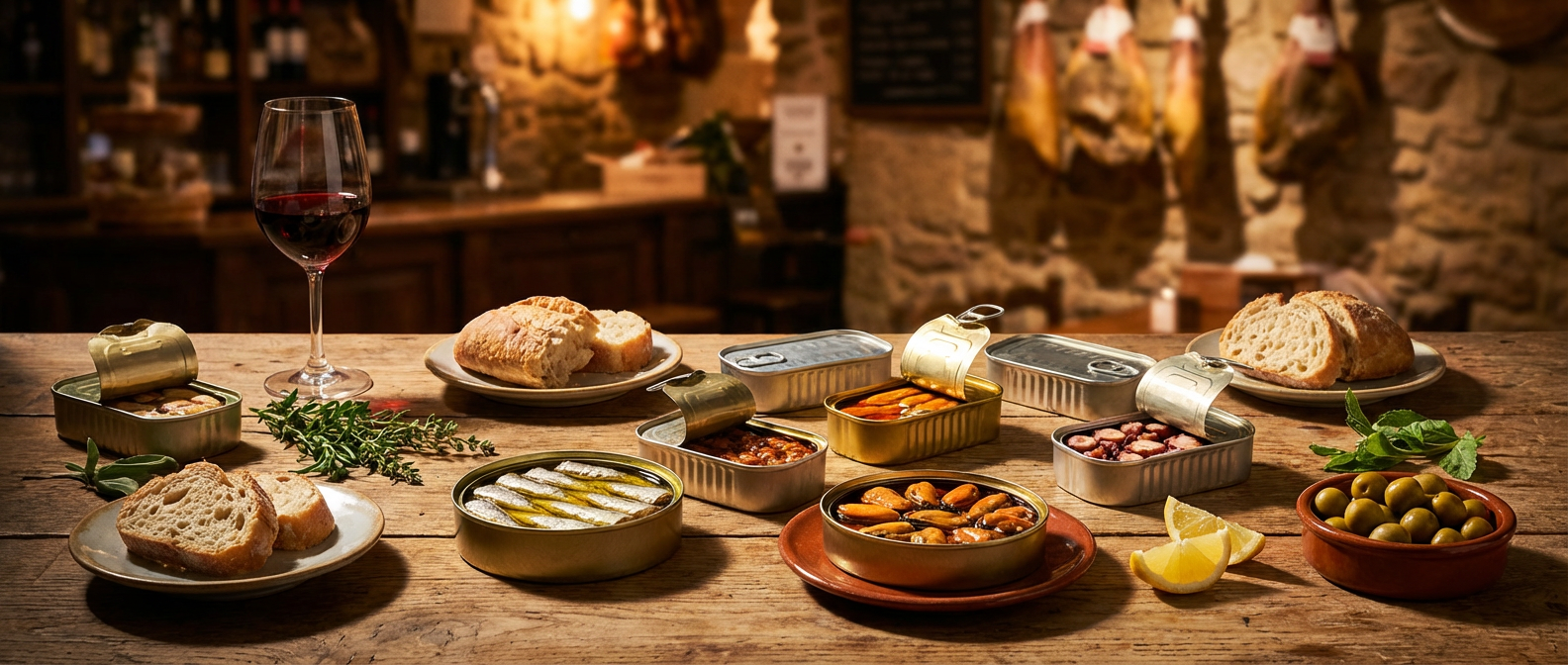
This isn’t about Instagram aesthetics or forced nostalgia. It’s about quality, availability, and restaurants finally figuring out how to build actual plates around these products. When a Galician brand like Conservas Albo, operating since 1906, sees a 200 percent jump in US exports after landing on Bon Appétit’s pantry staples list and showing up on James Beard Award-nominated menus, something has genuinely changed in how we think about seafood. These aren’t novelty items anymore. They’re ingredients.

Why Spanish Conservas Are Different From What You’ve Been Buying
Most people’s experience with tinned fish comes from either sad grocery store cans designed for survival or the recent wave of trendy European imports that taste like they’ve been marinated in marketing copy. Spanish conservas operate in a completely different register. The methodology is older, more careful, and unapologetically technical in a way that American food culture hasn’t quite caught up with.
Hand-packing is the operative phrase. Unlike industrial operations that move product through assembly lines at speed, Spanish conserva makers still pack many of their tins by hand, which means someone is actually looking at each piece of fish before it goes into the tin. The environmental data backs this up too. According to the Marine Stewardship Council Sustainable Seafood Report, these hand-packed operations maintain some of the lowest carbon footprints per gram of protein in the entire seafood industry. Superior product with a smaller environmental footprint. That’s just how it works.
The oil matters in ways most people haven’t considered. A good Spanish conserva isn’t swimming in filler oil. The oil is often specific, regional, sometimes from particular producers, and it functions as part of the product rather than as packaging material. When you open a tin of mussels or anchovies from a proper producer, you’re meant to use that oil. It’s integral to the eating experience and, more importantly, to how you’ll build a meal around it.
Building a Dinner That Actually Works
This is where theory meets plate. Spanish conservas aren’t ingredients you apologize for. They’re the centerpiece. The most reliable structure I’ve found: start with a tin as your primary protein, build your vegetables and starch around its flavor profile and textural requirements, then make sure your fat and acid are calibrated to punch through the richness of the tin.
For white fish conservas like mero or turbot, think butter-poached potatoes, something acidic and bright (preserved lemon, sherry vinegar, citrus), and a raw or barely-cooked vegetable to cut the richness. Open the tin, spoon its oil into a small pan with good butter, add your potatoes and let them finish cooking in that mixture. The fish itself goes on at the very end, gently warmed through, never cooked. Finish with a squeeze of lemon, maybe some fleur de sel, done. Forty-five minutes total.
Mussels and sea urchin conservas want different treatment. These are richer, more minerally. Pair them with grain rather than potato. Toast some farro or barley in the conserva’s oil first, then build from there. Shallots, garlic that’s been barely kissed with heat, white wine, a splash of the brining liquid from the tin. The vegetables cook into the grains. The seafood goes in last, just to warm. This is not complicated cooking. It’s just methodical cooking.
Octopus and squid conservas are your most forgiving play. These can handle heat, bold flavors, acid in abundance. Warm crusty bread in the oil from the tin until it’s golden, top with the seafood, finish with hot sauce, shaved fennel, maybe some capers if you want sharpness. Three minutes of actual work, dinner that tastes like you spent two hours on it.
The Infrastructure Is Building Faster Than You’d Expect
New York’s West Village now has La Lata, which is, as far as I can tell, the first bar in the city organized entirely around Spanish conservas. It opened in October 2025 and earned a Michelin Bib Gourmand designation in the 2026 New York guide within ninety days. That’s not typical for new restaurants. It tells you that trained cooks and critics see something legitimate here, not just a fad with better marketing.
The consumer side is tracking similarly. Food52’s 2025 holiday gift guide listed tinned fish assortments as its most-purchased item for the second year running, with average order values hitting 68 dollars, up from 45 dollars two years prior. People aren’t just buying these products. They’re buying them with intention, spending more per purchase, and apparently giving them as gifts that people actually want. That’s the behavior of a product category that’s moved from experimental to established.
Where to Start and What Actually Matters
You don’t need to spend money like you’re trying to impress someone. Start with a single tin from a producer with a proper track record. Look at the origin point, the date it was canned, and whether the producer is identifiable and accessible. If you can find information about them quickly, that’s usually a good sign. If the back of the tin is a wall of mysterious abbreviations and ingredients you can’t source, keep looking.
Cook that first tin as simply as possible. Toast some bread, open the tin carefully, use what’s inside as the main event rather than a supporting player. You’ll understand immediately whether it’s worth building a dinner around or whether you’ve bought marketing instead of food.
What have you found that works? What brands are actually delivering when you open the tin? I’m interested in whether this trajectory holds or whether we’re watching the natural life cycle of another food trend. Send me a note about what’s working in your kitchen.